Hey there, electronics enthusiasts! I’m a supplier in the MOSFET game, and today I wanna chat about the role of a MOSFET in an LED driver circuit. It might sound a bit technical, but I’ll break it down in simple terms so you can see why these little components are so crucial. MOSFET
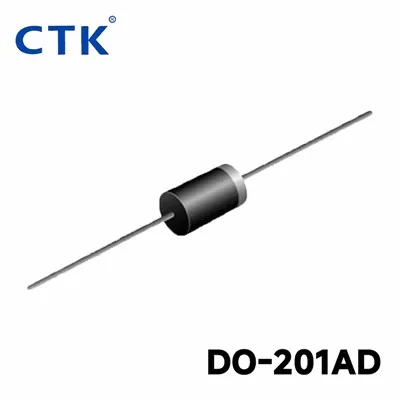
First off, let’s get a basic understanding of what an LED driver circuit is. LEDs are super energy – efficient and long – lasting light sources. But they can’t just be plugged directly into a power source. That’s where the LED driver circuit comes in. Its main job is to provide a stable and appropriate amount of current and voltage to the LEDs. This ensures that the LEDs shine brightly, consistently, and for a long time.
Now, onto the MOSFET. MOSFET stands for Metal – Oxide – Semiconductor Field – Effect Transistor. Sounds fancy, right? Well, it’s actually a pretty cool device. A MOSFET acts like an electronic switch or a current controller in an LED driver circuit.
One of the key roles of a MOSFET in an LED driver is current regulation. LEDs are very sensitive to the amount of current flowing through them. If too much current passes through, they can overheat, get damaged, or even burn out. On the other hand, if the current is too low, the LEDs won’t shine as brightly as they should.
The MOSFET can be used to control the current going to the LEDs. By adjusting the voltage at the gate terminal of the MOSFET, we can change its resistance. This, in turn, controls the amount of current flowing through the drain – source path, which is connected to the LED circuit. It’s like using a faucet to control the flow of water. You turn the handle (adjust the gate voltage), and the amount of water (current) changes.
For example, in a simple constant – current LED driver circuit, the MOSFET is used to maintain a steady current. The control circuitry measures the current flowing through the LEDs. If the current starts to deviate from the set value, the voltage at the gate of the MOSFET is adjusted. If the current is too high, the MOSFET’s resistance is increased, reducing the current. If the current is too low, the resistance is decreased, allowing more current to flow.
Another important role of the MOSFET is in switching applications. In some LED driver circuits, especially those that use pulse – width modulation (PWM) dimming, the MOSFET acts as a high – speed switch. PWM dimming is a technique used to control the brightness of LEDs. Instead of changing the current directly, the LED is turned on and off very quickly. The ratio of the on – time to the total time (duty cycle) determines the perceived brightness of the LED.
The MOSFET can switch on and off at very high frequencies, often in the range of kilohertz or even megahertz. This fast switching ability allows for precise control of the duty cycle. For instance, if we want the LEDs to be dimmer, we decrease the duty cycle by keeping the MOSFET off for a longer period of time. If we want full brightness, the duty cycle is set to 100%, meaning the MOSFET is always on.
The MOSFET also has very low power dissipation when it’s either fully on or fully off. This is a huge advantage in LED driver circuits. When the MOSFET is on, it has a very low resistance, so there’s little power loss in the form of heat. When it’s off, almost no current flows through it, also resulting in minimal power dissipation. This energy – efficiency is great for LED drivers, as it helps to keep the overall power consumption low and the LED driver cool.
In addition to current regulation and switching, the MOSFET can also provide protection in the LED driver circuit. For example, it can be used in over – current protection circuits. If there’s a short – circuit or some other fault in the LED circuit that causes an excessive current to flow, the MOSFET can be turned off quickly. This prevents damage to the LEDs and other components in the driver circuit.
There are different types of MOSFETs available, such as N – channel and P – channel MOSFETs. N – channel MOSFETs are more commonly used in LED driver circuits because they typically have lower on – resistance and can handle higher currents. They also require a positive voltage at the gate to turn on, which is easier to implement in many circuit designs.
When choosing a MOSFET for an LED driver circuit, there are a few important factors to consider. First is the voltage rating. The MOSFET should be able to handle the maximum voltage that will be present in the circuit. If the voltage rating is too low, the MOSFET can break down and cause a short – circuit.
Another factor is the current – carrying capacity. This is the maximum amount of current that the MOSFET can handle without overheating. It’s important to choose a MOSFET with a current rating that is higher than the expected maximum current in the LED driver circuit.
The on – resistance is also crucial. A lower on – resistance means less power loss and better energy efficiency. And of course, the switching speed is important, especially for PWM dimming applications. A fast – switching MOSFET allows for more precise control of the LED brightness.
As a MOSFET supplier, I’ve seen firsthand how important it is to choose the right MOSFET for an LED driver circuit. We offer a wide range of MOSFETs, each designed to meet different requirements in terms of voltage, current, on – resistance, and switching speed. Whether you’re working on a small, low – power LED project or a large – scale commercial lighting system, we have the MOSFET that’s right for you.
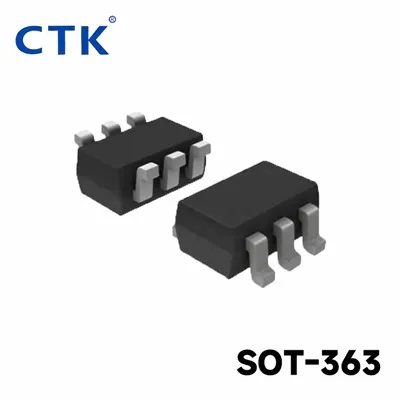
If you’re in the market for high – quality MOSFETs for your LED driver circuits, don’t hesitate to get in touch. We’re here to help you find the best solution for your specific needs. Whether you have questions about the technical specifications, need advice on circuit design, or just want to talk about the latest trends in LED lighting, we’re your go – to source. So, drop us a line and let’s start the conversation about how we can work together to make your LED projects shine bright!
Transistor References
- "Electronic Devices and Circuit Theory" by Robert L. Boylestad and Louis Nashelsky
- "Power Electronics: Converters, Applications, and Design" by Ned Mohan, Tore M. Undeland, and William P. Robbins
- Various industry – published whitepapers on LED driver circuits and MOSFET applications
Tongke Electronic Co., Ltd
Tongke Electronic Co., Ltd. is one of the most experienced mosfet manufacturers and suppliers in China, featured by quality products and low price. Please rest assured to wholesale advanced mosfet made in China here from our factory. Contact us for pricelist.
Address: No.3,Chayuan Rd, Street 3, AilingKan, Dalingshan, Dongguan, Guangdong, China.
E-mail: jack@ctk-elec.com
WebSite: https://www.ctkchip.com/
