Hey everyone, it’s Jake from [Your Company Name], and today I wanna talk about something that doesn’t get nearly enough shine when it comes to making events go off without a hitch—frame scaffolding for event staging. If you’ve ever been to a music festival, a big corporate product launch, or a theater’s outdoor production, you’ve seen that scaffolding holding up stage lights, speakers, big screens, maybe even that giant backdrop with the brand logo. But what most people don’t realize is that slapping up any old frame scaffolding just won’t cut it. There are actual, super important design requirements that we as a scaffolding supplier (and you as an event planner) need to nail down to keep everyone safe, make the event look good, and avoid that last-minute panic when something wobbly shows up. Let’s break this down like we’re hanging out at a coffee shop—no stuffy jargon, I promise. Frame Scaffolding

First off, let’s get one thing straight: event staging scaffolding is way different from the stuff you see on a construction site. Construction scaffolding is there for days or weeks, usually on solid ground, working with heavy building materials. Event scaffolding is often going up and coming down in days, sometimes in weird spots—like a grassy field, a rooftop, even a wet parking lot during a rainstorm. And it’s supporting way more than just workers carrying bricks. It’s holding 500-pound speaker stacks, 100-pound LED screens, hundreds of strings of lights, and let’s not forget the people who might be leaning on it or even climbing up to adjust a screen mid-event. So our first big design requirement is load capacity, and I mean the real, actual load—not the number a salesman guesstimates when he’s in a hurry.
Wait, let’s dive deeper into load capacity because this is where so many mistakes happen. When we design frame scaffolding for events, we don’t just go by the generic “this frame holds X pounds” rating. We have to calculate every single load that’s gonna be on it, all at the same time. For example, if a stage is gonna have four line arrays (those tall speaker stacks hanging over the crowd), each one is like 300 pounds. Then add 20 LED screens, each 80 pounds, plus the weight of the metal trusses holding all that, plus the weight of the cables running everywhere (those add up—we’re talking like 10 pounds per foot, easy). Oh, and don’t forget live loads! Wait, what’s a live load here? That’s the stuff that moves or isn’t permanent. Like, a tech who climbs up to fix a light—maybe 180 pounds, and if two techs are up there at the same time, that’s another 180. Or even a gust of wind! Wind load is huge for event scaffolding because most events are outdoors, and wind can pick up way faster than anyone expects. We always factor in a safety margin of at least 4:1, which means if the total load is gonna be 1,000 pounds, the scaffolding has to be rated to hold 4,000 pounds. I’ve seen too many events skip this and end up with a frame bending or, worse, collapsing, and that’s not just bad for the event—it’s dangerous.
Next up is stability, and this ties right into where the scaffolding is being set up. Like, if you’re putting it on concrete, that’s one thing—we can use standard base plates and adjust the legs to make it level. But if it’s on grass? Grass is soft, it shifts, and if you don’t secure those base plates properly, the whole scaffolding can sink a little and become uneven. That’s a no-go. For grassy spots, we use spreader plates—big, flat metal plates that spread the weight over more area so it doesn’t sink. Sometimes we even use screw-in anchors for extra stability, especially if there’s wind. Rooftops are another tricky one. You can’t just drill into a roof every time—most event venues have rules about not damaging the roof. So we use weighted bases, but not just any weights—they have to be heavy enough, and positioned so they don’t tip the scaffolding over. Also, we have to make sure the rooftop can actually support the weight of the scaffolding plus all the gear on it. We’ve had clients say “the rooftop is solid” but then we have to do a quick check (or they have to provide load data) because if the rooftop caves a little, that’s a disaster.
Then there’s height and frame configuration. Event staging often needs scaffolding that’s taller than standard construction scaffolding, right? Like, if you’re hanging speakers 50 feet above the stage, that’s way higher than the usual 20-foot construction scaffold limit. But here’s the thing: the taller the scaffolding, the more wind load it takes, and the more it needs to be braced. We can’t just stack frame after frame—we have to use diagonal braces, horizontal ledger bars, and sometimes even cross-bracing on every other level, especially when it’s over 30 feet tall. Also, the frame spacing matters. If you have wide-spaced frames, they’re less stable. For line arrays and heavy screens, we use frames that are spaced closer together (like every 4 feet instead of 6 feet) to distribute the weight better. And we never skip the guardrails and toe boards. I know some event planners think “no one’s gonna climb up there, so why bother?” but accidents happen. A tech might slip, a cable might pull someone off balance, and if there’s no guardrail, they could fall onto the crowd or the stage below. Guardrails have to be at least 42 inches high, with a mid-rail, and toe boards to keep tools or parts from falling on people. It’s not just a rule—it’s basic safety.
Wait, another big one is compatibility with other event gear. Scaffolding isn’t just a standalone structure. It has to work with trusses for lights and screens, mount for speakers, and maybe even catwalks for the tech team to walk on. So when we design the scaffolding, we have to make sure the connections are tight and secure. For example, trusses don’t just sit on top of frames—they need to be clamped down with specific clamps that are rated for the weight. If you use the wrong clamp, the truss could slip, and that $50,000 LED screen comes crashing down. Also, we have to account for movement if the event is a temporary one where the stage might be adjusted, but wait—no, actually, once it’s set up, it can’t move. Unless it’s a rolling stage, but that’s a different scenario. No, for fixed event staging, the scaffolding has to be rigid. No wobbling when someone walks on the catwalk above the stage. We test every connection during setup, too—we don’t just put it together and hope. Our team does a load test for the highest parts, and checks all the bolts to make sure they’re torqued to the right level. Loose bolts are one of the most common causes of scaffolding accidents, and we’re not gonna let that happen for our clients.
Also, let’s talk about regulations and standards. I know it’s boring, but you can’t skip this. Different countries have different rules—like in the US, it’s OSHA, in the UK it’s HSE, in the EU it’s EN 1004. But even if the event is in a place where regulations are loose, we follow the strictest standards because we care about safety. We don’t cut corners on materials, either. All our frame scaffolding is made from galvanized steel, which is rust-resistant, so it doesn’t get weak over time, especially if it’s stored outside or used in rainy events. We never use damaged frames—even a tiny bend in a frame can make it way less strong, so we inspect every single frame before it leaves our yard, and again when we set it up on site.
Wait, let’s throw in a real quick story to make this relatable. Last year, we had a client doing a country music festival on a big grass field. They wanted to hang 12 line arrays over the main stage, and their original design used frames spaced 6 feet apart, no spreader plates, and only two guardrails. We looked at the design and said “that’s not gonna work—too much wind load, soft ground will make it sink, not enough bracing.” They pushed back a little, said “other suppliers said it’s fine.” But we stood our ground, adjusted the frame spacing to 4 feet, added spreader plates, extra cross-bracing, and a third guardrail. When we tested it during a pre-event wind simulation (we do that now, it’s worth the extra time), the original design would’ve moved 8 inches—way too much. Our adjusted design moved less than an inch. The client was grateful, and during the festival, even when a sudden gust hit (we’re talking like 40 mph), the scaffolding held steady. No issues, no panics, the event went off without a hitch. That’s why we don’t just sell scaffolding—we design it specifically for event staging, because it’s not one-size-fits-all.
Another thing: accessibility. Wait, event staging isn’t just about gear—it’s about people. If the event has disabled attendees, or techs with mobility needs, the scaffolding has to accommodate that. Catwalks need to be wide enough (at least 24 inches, per standards) for wheelchairs, and have non-slip surfaces, especially if it’s going to be wet from rain. Also, if there are access points for the tech team, those need to be secure, with proper ladders that are attached to the scaffolding, not just leaning against it. We see a lot of events where someone just props a ladder against the scaffold, and that’s a huge tripping or falling hazard. All our ladders are integral to the scaffolding structure, with slip-resistant rungs.
Wait, let’s not forget about fire safety. Events have a lot of flammable stuff—backdrops made of fabric, stage curtains, even the cables if they’re frayed. The scaffolding can’t be a fire hazard. Galvanized steel is non-combustible, which is a big plus, but we also make sure that there’s space between the scaffolding and any flammable materials—at least 3 feet, unless they’re fire-retardant. Also, we coordinate with the event’s fire marshal to make sure the scaffolding doesn’t block fire exits, access to fire extinguishers, or emergency routes. That’s another requirement that’s easy to miss, but if there’s an emergency, you can’t have scaffolding blocking the way out.
Let me wrap this up, because I know I’ve rambled a bit, but that’s how I talk. The main design requirements for frame scaffolding in event staging boil down to five key things: accurate load calculation (with safety margins that aren’t a joke), stability tailored to the ground it’s on, proper height and bracing to handle wind, compatibility with event gear and compliance with safety standards, and accessibility/fire safety for people. As a frame scaffolding supplier, we don’t just drop off a pile of frames and call it a day—we work with event planners, production teams, and venue managers to design a scaffolding system that fits their specific event, their venue, and their needs. We do site visits, run load tests, adjust the design on the fly if something comes up, and we’re there on setup day to make sure everything is put together right.
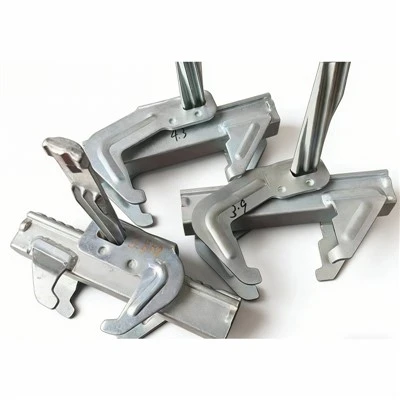
If you’re planning an event and you’re in need of frame scaffolding that’s designed specifically for staging—no cheap, generic stuff, no last-minute headaches—hit us up. We can walk you through the design process, answer all your questions, and make sure your event’s scaffolding is safe, stable, and ready to hold whatever gear you throw at it. Don’t risk cutting corners on scaffolding safety—trust the team that’s been doing this for years, knows the requirements inside and out, and cares as much about your event going well as you do.
Scaffolding Accessories References
- Occupational Safety and Health Administration (OSHA). (2023). Scaffolding Standard: 29 CFR 1926 Subpart L.
- Health and Safety Executive (HSE). (2022). scaffolding for events and temporary structures: guidance for designers and users.
- European Committee for Standardization (CEN). (2021). EN 1004: Mobile access and working scaffolds and special scaffold structures in steel.
- International Association of Venue Managers (IAVM). (2022). Temporary Structures Guidelines for Event Staging and Production.
Rizhao Wellfit Scafform Co., Ltd.
As one of the most professional frame scaffolding manufacturers and suppliers in China, we have world-leading production equipment and strong manufacturing capabilities. Please feel free to buy high quality frame scaffolding at competitive price from our factory.
Address: No. 7, Huasheng Road, Taoluo Town Industrial Zoon, Donggang District, Rizhao City
E-mail: sales@wfscafform.com
WebSite: https://www.wfscafform.com/
