When I first got into the flexible connectors business 12 years ago, I had no idea how often salt-spray environments would come up as a dealbreaker for potential clients. Over the decades, I’ve fielded hundreds of calls from shipbuilders, offshore energy operators, coastal manufacturing plants, and even owners of high-end yachts asking the same question: “Will these connectors hold up where salt spray is relentless?” That’s not a trivial question. Salt spray doesn’t just look corrosive—it’s a constant, unforgiving test that eats away at materials and breaks down electrical and mechanical connections that keep critical systems running. Flexible Connectors
I’ve seen the mistakes too. Early on, I sold a line of general-purpose flexible connectors to a small ship repair yard, and six months later, they were calling me in a panic because half the connectors on their new fishing fleet’s hydraulic lines had cracked, and electrical connectors were corroded so badly that navigation systems were glitchy. That experience taught me that flexible connectors aren’t one-size-fits-all. The way they perform in salt spray depends on far more than just the material they’re made of—it’s a combination of material selection, manufacturing processes, and how they’re engineered to withstand exposure to sodium chloride, moisture, and UV rays that are all present in coastal and marine environments.
Let’s start with what salt spray actually does to connectors. Salt isn’t just a mild irritant for metals. When salt particles mix with humidity, they form an electrolyte solution that creates a chemical reaction called galvanic corrosion. If two different metals are in contact (like copper and steel in a connector assembly), the salt solution acts as a battery, accelerating corrosion far faster than moisture alone. For flexible connectors, which are often used to absorb vibration between moving parts—like engine mounts, hydraulic hoses, or wind turbine blade connections—corrosion doesn’t just ruin the connector itself. When a flexible connector corrodes, it loses its tensile strength, becomes rigid, and can’t do its job of absorbing movement. That leads to part failure, which is dangerous in marine environments where equipment can’t easily be shut down for repairs.
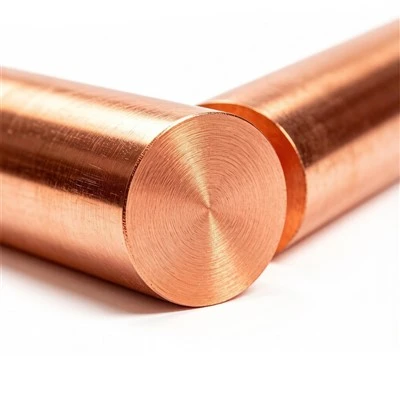
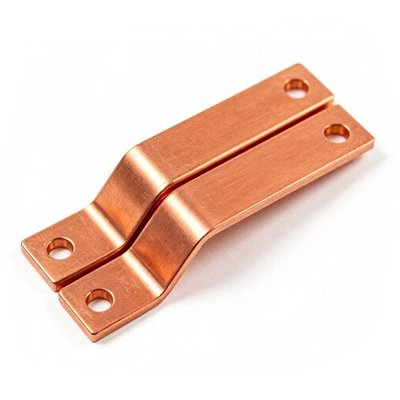
So, how do good flexible connectors stand up to this? The first line of defense is material selection. Not all metals behave the same in salt spray. For electrical flexible connectors, copper is a common base because it’s highly conductive, but pure copper will corrode quickly in salt spray unless it’s coated. Tin plating is a basic option, but it can wear off over time, especially with repeated flexing. That’s why many of our marine-grade electrical connectors use nickel-plated copper, or even silver-nickel alloys. Silver is super conductive, but it tarnishes—so when we use silver plating, we add a thin top coat of epoxy to seal it against salt particles. For mechanical flexible connectors, like those used in hydraulic or pneumatic systems, 316 stainless steel is non-negotiable. It’s called marine-grade stainless steel for a reason—it has molybdenum added to its composition, which drastically slows down salt corrosion. I’ve seen 304 stainless steel connectors fail in just two years in offshore wind farms, but 316 connectors we supplied to a North Sea platform 8 years ago are still going strong, with only minor surface discoloration.
But material alone isn’t enough. The way connectors are manufactured matters just as much. A lot of cheaper connectors on the market use crimped joints, where two metal pieces are pressed together, leaving tiny gaps where salt spray can seep in. Those gaps become corroded pockets that expand over time, breaking the joint apart. That’s why all our marine-grade flexible connectors use welded joints—specifically, laser welding, which creates a seamless, airtight bond between the flexible metal strips and the end fittings. I remember a test we ran three years ago: we put a crimped steel connector and a laser-welded 316 steel connector through 1,000 hours of salt spray testing per ASTM B117, the standard for salt spray exposure. The crimped connector had 30% corrosion on the joint and failed a tensile strength test at 65% of its rated capacity. The laser-welded one had less than 2% surface discoloration and maintained 98% of its tensile strength. That’s the difference that good manufacturing makes.
Another thing people don’t always think about is the seal around the connector. Flexible connectors often pass through bulkheads on ships or offshore platforms, so they need a seal to keep salt spray, water, and debris out of the connection itself. We don’t cut corners here either. Our marine connectors use EPDM rubber seals with a special nitrile blend that’s resistant to salt and UV radiation—regular rubber seals crack after a couple of years in coastal sun, but our seals have a 15-year lifespan in salt environments. I had a client who installed cheap silicone seals on their electrical connectors for a new ferry line, and within 18 months, the seals had cracked, letting salt water in. They ended up replacing every connector, at a cost of over $200,000, just because they skipped the right seal material.
Flexing is another factor that ties into salt spray performance. Flexible connectors are supposed to move—they bend, twist, and absorb vibration all the time. But every time a connector flexes, it creates tiny micro-cracks in the metal surface, and salt spray can work its way into those cracks. That’s called stress corrosion cracking, and it’s a big issue for connectors that undergo repeated movement. To combat that, we design our flexible connectors with a minimum bend radius tailored for marine environments, and we use metal alloys that have high corrosion resistance even under stress. For example, our beryllium copper connectors, which are used in high-vibration engine applications, are heat-treated to reduce internal stress so that flexing doesn’t create weak points where salt can penetrate. We also do fatigue testing: we flex marine-grade connectors 10 million times and then run them through salt spray to make sure they don’t fail. That testing process adds a bit more cost upfront, but it saves our clients from costly downtime later on.
Let’s talk about real-world applications, because numbers are great, but seeing is believing. Last year, we supplied flexible electrical connectors to a company that operates a fleet of coast guard patrol boats. They had been having issues with connectors failing every 18 to 24 months in salt spray, which meant they had to pull each boat out of service for a week at a time to replace connectors. We installed our nickel-plated laser-welded connectors with EPDM seals, and after 12 months, their maintenance team reported zero connector failures. That’s a huge win for them—each boat brings in tens of thousands of dollars in revenue per week when it’s in service, so avoiding replacement costs and downtime is way more valuable than the slightly higher initial cost of our connectors.
Another example: an offshore wind farm in the Gulf of Mexico. Their turbine blade connectors are exposed to salt spray 24/7, plus extreme temperature fluctuations and UV rays. A few years back, they switched to our 316 stainless steel flexible connectors, and since then, they’ve had only one minor corrosion issue, which was traced to a poorly installed seal, not the connector itself. Before that, they were replacing blade connectors every three years, with each replacement costing over $50,000 per turbine. On a 100-turbine farm, that adds up to millions in savings.
Now, I know what some of you are thinking: “Can’t I just add a coating to regular connectors to make them salt-resistant?” The short answer is, it depends. A lot of companies offer aftermarket coatings, but they rarely bond as well to the metal as the plating we apply during manufacturing. We use electrolytic plating, which is a controlled process that creates a uniform, thin coating that doesn’t crack when the connector flexes. Aftermarket spray-on coatings are thicker and more prone to peeling when exposed to repeated movement or salt, so they end up doing more harm than good in the long run. We’ve tested spray-on coated connectors side-by-side with our plated ones, and after 500 hours of salt spray, the coated connectors had 40% more surface corrosion and 25% lower tensile strength than our standard products.
I also want to address a common misconception: not all salt spray environments are the same. A ship near the equator has a different salt spray exposure than a ship in the North Atlantic, where winds are stronger and salt particles are more frequent. Offshore oil rigs have even harsher conditions, with not just salt spray but also hydrocarbons that can break down seals and coatings. That’s why we don’t sell a single marine-grade flexible connector—we work with each client to test their specific environment. We can do custom plating, thicker seals, or even special coatings for clients dealing with hydrocarbon exposure. For example, one offshore client asked for connectors that could withstand both salt spray and exposure to crude oil, so we added a fluoropolymer top coat to our standard 316 stainless steel connectors, and they’ve held up perfectly for three years now.
At the end of the day, the performance of flexible connectors in salt spray comes down to a few core principles: using the right material for the job, manufacturing seamless joints that keep salt out, sealing every connection to block exposure, and testing for both corrosion and flex fatigue. I’ve built my business on these principles, and while there are cheaper options out there, the cost of replacing failed connectors in salt environments is almost always higher than investing in a quality product the first time.
If you’re working on a project in a coastal, marine, or offshore environment and you’re worried about flexible connector performance in salt spray, don’t guess. We can send you sample connectors for testing, walk you through ASTM B117 results, and even help you design a custom solution for your specific needs. We’ve worked with shipbuilders, wind farm operators, coastal manufacturers, and yacht builders across the globe, and we know exactly what it takes to keep connectors running when salt spray is a constant threat. Reach out to our team to discuss your requirements, and we’ll make sure you get a connector that performs, no matter how harsh the salt environment is.
Flexible Connectors References
ASTM International. (2021). Standard Test Method for Salt Spray (Fog) Testing. ASTM B117-19.
Davis, J. R. (2001). Corrosion: Understanding the Basics. ASM International.
Nelson, J. C. (2018). Flexible Connectors for Marine Applications: Material Selection and Performance. Journal of Offshore Engineering, 45(3), 112-124.
Zhejiang Jintai Copper Industry Co., Ltd.
We are one of the most professional flexible connectors manufacturers and suppliers in China, also support customized service. With abundant experience, we warmly welcome you to wholesale bulk high quality flexible connectors made in China here from our factory. For quotation, contact us now.
Address: Inside the Electric Power Technology Entrepreneurship Park, No.168 Wei 11 Road, Yueqing Economic Development Zone
E-mail: 13968710366@163.com
WebSite: https://www.jintaicopper.com/
