As a steel fiber supplier, I get asked this question all the time—usually from contractors, mix designers, and on-site foremen who’ve either used steel fiber in concrete and seen mixed results, or are on the fence about switching from traditional reinforcement like rebar or mesh. The truth is, steel fiber doesn’t just change the strength of concrete; it’s one of the most underrated variables when it comes to how that concrete flows, sets, and behaves on the job. And as someone who’s worked with steel fiber for 12 years, testing every type from hooked-end to straight, micro to macro, I’ve seen firsthand how small choices around fiber type, dosage, and how you add it to a mix can make or break a pour. Steel Fiber
First, let’s define what workability really means for concrete folks. We’re not talking about how easy it is to work with for five minutes—workability is a holistic term: how well the mix flows into formwork, fills around rebar or conduit, how easy it is to place, vibrate, and finish, and even how it holds up before it starts to set. Poor workability doesn’t just slow down a job; it leads to voids, honeycombing, and inconsistent fiber distribution—all of which kill the long-term strength you’re trying to get from steel fiber.
Now, the big question: how does steel fiber impact this? It’s not a yes or no answer. It depends on three main things: the fiber’s physical properties (shape, size, aspect ratio), dosage rate, and how you integrate it into the mix. Let’s break each down, because this is where my experience as a supplier comes in— I’ve seen customers make the same mistakes over and over.
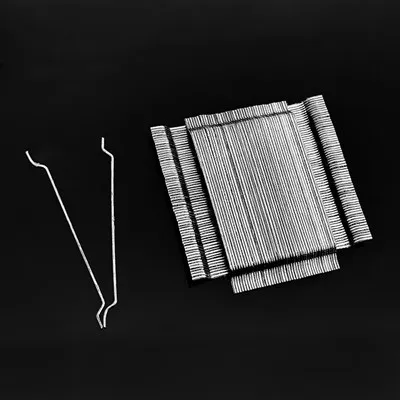
First, fiber shape and aspect ratio. Aspect ratio is just the length of the fiber divided by its diameter, and it’s the single biggest factor in workability. If you use a high-aspect-ratio hooked-end fiber—say, 60mm long with a 0.75mm diameter, that’s an aspect ratio of 80—you get great pullout strength once the concrete cures, right? But in the fresh mix? Those long, hooked fibers tangle like a bad ball of yarn. I had a customer in Dallas last year use a standard 60mm hooked fiber on a bridge deck pour, and they added the fiber to the central mixer like they would aggregates. By the time the mix reached the pump at the site, it was barely flowing—they had to add 15 gallons of extra water, which hurt the 28-day strength. That’s the mistake: high-aspect-ratio fibers create more inter-particle friction in a plastic concrete mix. The rough hooked ends catch on each other, turning a workable mix into something that feels like wet gravel.
On the flip side, micro steel fibers—those are usually 13mm to 20mm long, with aspect ratios around 40 to 60. I supply a lot of these for residential floor slabs and precast panels, and the difference in workability is night and day. The smaller, finer fibers don’t tangle nearly as much, so they disperse more evenly without locking up the mix. A customer in Atlanta did a side-by-side test last year: same mix design, same water-cement ratio, one with micro fiber at 20kg/m³, one with standard hooked fiber at 40kg/m³. The micro fiber mix had a slump of 180mm, which is perfect for pumping and finishing, while the hooked fiber mix only had a slump of 120mm—just above the threshold for workable pumped concrete. That’s not to say high-aspect fibers are bad, but you have to adjust how you add them, and sometimes you’ll need a superplasticizer to offset the friction.
Next up: dosage rate. This is another area where I see suppliers and contractors get it wrong. More fiber doesn’t always mean better performance in fresh concrete. For most general structural applications, the sweet spot is between 25kg/m³ and 50kg/m³. Go above 50kg/m³, and workability drops off sharply. At that point, the fibers act like a rigid network in the mix, preventing the cement paste from lubricating the aggregate particles. I had a precast customer in Chicago try to use 65kg/m³ of fiber for a heavy-duty culvert, and their mix couldn’t be vibrated properly—they ended up with voids along the sides of the forms because the concrete wouldn’t flow into the corners. When they dropped the dosage to 45kg/m³ and added a mid-range superplasticizer, they got a consistent, void-free pour, and the strength ended up meeting specs anyway—no need for that extra fiber.
But wait, that’s not a hard rule. For ultra-high-performance concrete (UHPC), you might use up to 200kg/m³ of fiber, and workability is still manageable. Why? Because UHPC has a much lower water content, and the fibers are usually smaller, straight, and optimized to disperse in a dense, fine matrix. That’s a specialized case, though—most of the projects my customers bring me are standard structural concrete, so dosage is a tight balance between performance and workability.
Then there’s the mixing process itself, which is something I harp on with every customer. How you add steel fiber to the mix makes a bigger difference than most people realize. If you just dump the entire bag of fiber into the mixer at once, you’re going to get balling—those tangles I mentioned earlier. The right way is to add the fiber gradually, either while the mixer is running, after 70% of the mixing time, and usually after the coarse aggregates are already coated in cement paste. I recommend adding the fiber at a slow, steady rate over 2 to 3 minutes, not all at once. A customer in Houston learned this the hard way two years ago: they added 1000kg of fiber to a 3m³ mixer in 30 seconds, and ended up with a mix that was 20% fiber balls. They had to discard half the batch because the balls caused voids. When they adjusted the addition rate, the same mix had zero balls, and workability stayed consistent through the pour.
Now, let’s talk about the flip side—can steel fiber ever improve workability? That’s a question I get from time to time, and the short answer is: in some cases, yes, but usually not in the way you think. Wait, how? Let’s compare to fiber mesh or rebar. If you replace 0.5% of rebar by volume with steel fiber, you don’t have to place heavy rebar cages, right? That frees up time on the job, which can feel like an improvement in workability overall. Also, steel fiber can reduce bleeding in concrete—bleeding is when water rises to the surface of the fresh mix, which makes finishing harder and can lead to weak surface layers. I had a customer in Miami pour a parking garage deck two years ago, and they used a fiber-reinforced mix instead of mesh. They reported 30% less bleeding than their previous mesh-reinforced pours, so finishing was faster and the surface was more consistent. That’s a real workability benefit, even if it’s indirect.
But I want to be honest here—steel fiber does have a downside for workability, especially if you don’t select the right product for your project. I see a lot of contractors buy cheap steel fiber from overseas, just to get a lower price, and those fibers are often inconsistent in shape and size—some are longer, some have sharp, irregular ends, which increases friction and tangling. That leads to lower workability, more water added, and weaker concrete. As a supplier, I don’t push the most expensive fiber, but I do push consistent, tested fiber that’s sized for the application. For example, if a customer is doing a residential slab-on-grade, I recommend our 19mm micro hooked fiber, which is consistent, disperses easily, and doesn’t hurt workability. For a heavy-duty industrial floor, I recommend our 30mm macro fiber, which is still manageable at 40kg/m³ if mixed properly.
Let’s also talk about common misconceptions. A lot of people think adding water will fix poor workability from fiber—don’t do that. Every 10kg/m³ of extra water can reduce compressive strength by 5 to 10%, which defeats the whole point of using fiber for structural performance. Instead, use a high-range water reducer (superplasticizer) or mid-range superplasticizer, calibrated for fiber-reinforced mixes. I’ve tested this: adding a standard superplasticizer to a fiber mix works, but fiber-specific superplasticizers work better because they don’t cause the fiber to flocculate (clump together). That’s a tip I give every customer, and it’s saved more than one pour.
Another common mistake: not accounting for fiber in slump tests. The standard slump test is great for plain concrete, but for fiber-reinforced concrete, you need a modified slump test or a flow table test, because fibers can make the slump reading lower than actual workability. For example, a mix with 40kg/m³ of fiber might have a slump of 100mm, but a flow test might show it has the same workability as a plain concrete mix with a 150mm slump. That’s why I always advise customers to use flow tests for fiber-reinforced concrete, not just standard slump.
Let’s circle back to real-world projects to make this concrete (pun intended). Last quarter, I worked with a construction company in Austin on a 5,000 square foot tilt-up wall project. They were using rebar and mesh, but wanted to switch to fiber to cut down on installation time. We recommended our 25mm hooked-end fiber at 35kg/m³, with a mid-range superplasticizer. They mixed it correctly: added aggregates first, then cement, then water, then fiber over 2 minutes while the mixer ran. The slump was 150mm, which was perfect for pumping and placing. They poured all 12 wall panels in one day, no voids, no tangles, and they saved 2 days on rebar and mesh installation—money they calculated at over $15,000 for that project. That’s the sweet spot: using the right fiber, at the right dosage, mixed properly, so you get both the workability you need and the strength benefits of steel fiber.
On the flip side, I had another customer in San Antonio use the wrong fiber for a small residential slab. They bought cheap, long hooked fiber from a non-specialty supplier, added it to the mixer all at once, and ended up with a mix that was almost impossible to finish. They had to hire extra workers just to spread the concrete, and the surface had small voids because the concrete wouldn’t flow into the edges. When they called me, I walked them through adjusting the fiber addition rate, dropping the dosage by 5kg/m³, and adding a small amount of superplasticizer. The next pour was smooth, they finished on time, and the strength met all the local building codes. That’s why I’m always available to work through these issues—good workability with steel fiber isn’t rocket science, but it does require knowing the variables.
At the end of the day, steel fiber is a tool—like any tool, it works best when you use it correctly. The key takeaways when it comes to workability: choose the right fiber shape and aspect ratio for your project, keep dosage between 25 and 50kg/m³ for most structural applications, add fiber gradually to avoid tangles, use the right tests to measure workability, and don’t overwater to fix flow issues.

If you’re working on a project and you’re not sure which steel fiber is right for you, or you’re dealing with poor workability on a current fiber-reinforced concrete pour, I’m here to help. We can test your mix, recommend the right fiber type and dosage, and walk you through the mixing process to make sure your concrete flows as it should. There’s no one-size-fits-all solution, but with the right guidance, steel fiber can improve not just the long-term performance of your concrete, but the efficiency of your entire project on-site.
PP Fiber References:
- Naaman, A.E., and Reinhardt, H.W. (2006). High Performance Fiber Reinforced Cement Composites 6. RILEM Publications.
2.ACI 544.2R-18. (2018). Measurement of Properties of Fiber Reinforced Concrete. American Concrete Institute. - Ramakrishnan, V., and Bharatkumar, B.H. (2000). Workability of Steel Fiber Reinforced Concrete. Journal of Materials in Civil Engineering, Vol. 12, No. 2, pp. 134-140.
- Bentur, A., and Mindess, S. (2007). Fibre Reinforced Cementitious Composites, 2nd Edition. Taylor & Francis.
Tangshan Yian Metal Products Co., Ltd.
Tangshan Yian Metal Products Co., Ltd. is one of the leading steel fiber manufacturers and suppliers in China. We warmly welcome you to buy cheap steel fiber from our factory. All our products are with high quality and low price. Contact us for quotation and free sample.
Address: Industrial Park, Yahongqiao Town, Yutian County, Tangshan City, Hebei Province
E-mail: tinasong@yianmetal.com
WebSite: https://www.yianfiber.com/
