If you’ve ever walked past a water treatment plant with sparkling, clear effluent flowing out, or seen a metal part that’s been perfectly etched without pitting or corrosion, there’s a good chance a titanium anode was working quietly behind the scenes. For nearly 15 years, I’ve been supplying titanium anodes to companies ranging from municipal water districts to custom metal fabrication shops, and one question I get asked more than any other is: “How does this thing actually work?” Most people picture it as just another industrial metal part, but the science underpinning electrooxidation with titanium anodes is equal parts clever engineering and precise chemistry—enough to make a non-chemical engineer’s head spin, if you don’t break it down simply. Let’s walk through it, starting with the basics, and tie in why our anodes make all the difference for your operation. Titanium Anode

First, let’s get one critical definition out of the way: an anode, by definition, is the positive electrode in an electrochemical cell. If you’re running an electrooxidation process, that means it’s the part that pulls electrons away from the molecules you’re treating, right? But here’s where standard steel or graphite electrodes fall apart fast—most common anode materials corrode, dissolve, or foul within weeks of use, especially in harsh industrial conditions like high-salt wastewater or acidic etching baths. That’s why titanium became the gold standard for anodes starting in the 1970s: pure titanium has a self-healing oxide layer. When it’s exposed to oxygen (even small amounts from water or air), it instantly forms a 2 to 5 nanometer thick layer of titanium dioxide (TiO2) on its surface. This layer is inert, highly conductive, and almost impossible to dissolve under normal electrooxidation voltages. It’s like a tiny, impenetrable shield that lets current pass through but keeps the titanium core intact.
But pure titanium can’t do electrooxidation on its own. If you just stick a plain titanium plate into a water bath and run current through it, you’ll mostly get hydrogen gas forming at the cathode (the negative electrode) and oxygen gas bubbling off the titanium anode—but not much useful oxidation of the target molecules. That’s why every titanium anode worth using is coated with a thin, proprietary layer of mixed metal oxides (MMOs). This coating is the magic sauce, and it’s what separates a cheap imported titanium anode from one that lasts 10+ years with minimal maintenance. The MMO layer is usually a mix of ruthenium dioxide, iridium dioxide, and sometimes other rare earth metals, applied in multiple thin coats via high-temperature thermal decomposition. When that coating is applied, it turns the smooth titanium surface into a high-surface-area, catalytic active layer that can drive specific oxidation reactions at much lower voltages than plain titanium would.
Now, let’s walk through the actual electrooxidation process step by step, using a common industrial example: treating municipal reverse osmosis (RO) wastewater, which has trace amounts of pharmaceuticals, personal care products, and microplastics that traditional filtration can’t remove. Let’s say you have two electrodes in a tank: the positive titanium anode and a negative cathode (usually stainless steel or another titanium base material). When you apply a low-voltage direct current (DC) power supply across the two electrodes, several things happen at the anode surface, in this specific case:
First, water molecules in the wastewater get adsorbed onto the active sites of the MMO coating. The titanium anode pulls electrons from those water molecules (since the anode is electron-deficient, that’s what positive charge means). That reaction generates hydroxyl radicals (•OH) — highly reactive, short-lived molecules that have one unpaired electron, making them eager to react with and break down organic contaminants. But that’s not the only reaction. If the wastewater has chloride ions (salt, from things like road runoff or household cleaning products), the anode will also catalyze the formation of hypochlorous acid (HOCl) and hypochlorite ions (OCl-), which are powerful oxidizers that are great for disinfecting water or breaking down persistent organic pollutants like pesticides. For metal etching applications, the MMO coating catalyzes the dissolution of the target metal (like stainless steel or aluminum) at a controlled rate, without corroding the anode itself.
Wait, a common question I get: why doesn’t the MMO coating wear out? Well, it does—slowly. If you run too high a current, or have too much contaminants in your process water that attack the coating, it will degrade over time. But when applied correctly, the MMO coating lasts 5 to 15 years, depending on the application. I recently worked with a fabricator that uses our ruthenium-iridium coated titanium anodes for aluminum etching; they swapped out their old graphite anodes every 3 months, and have been running the same set of our anodes for 7 years with no performance drop. That’s the value we deliver as a supplier: we don’t just sell you a titanium plate, we coat it with the exact MMO mix tailored to your specific process, whether that’s water disinfection, cyanide destruction in mining wastewater, or electroplating.
Let’s clear up another myth: a lot of people confuse titanium anodes with “inert anodes,” but they’re not truly inert. The core titanium never corrodes, but the MMO coating will slowly break down as it drives oxidation reactions. When it does, you’ll notice signs like higher voltage draw, reduced reaction efficiency, or inconsistent output. That’s why our team offers pre-coating compatibility testing for new customers: we’ll send you a small, test-sized anode, run it through a small pilot of your process, and give you a data sheet on how long it’s expected to last, before you invest in a full order. No guesswork, no wasted money on one-size-fits-all anodes that don’t work for your specific application.
Another key point about how titanium anodes work: their structure is flexible, which is a big advantage over rigid graphite anodes. You can make our anodes as flat plates, curved mesh, rod shapes, or even custom geometries to fit your specific tank or reactor design. For example, a customer in the semiconductor industry needed cylindrical anodes to fit into a small, high-precision etching tank; we machined pure titanium cores to match their exact dimensions, then coated the inner and outer surfaces with an iridium-based MMO layer, and they’ve had zero defects in their wafer etching process in 4 years. That customizability is something many generic titanium anode suppliers can’t offer, because they run mass-production lines for standard plate sizes.
Let’s get into the chemistry a little more, to explain why titanium is so much better than other anode materials. When you use a graphite anode, during electrooxidation, the high voltage can cause the graphite to oxidize into carbon dioxide, slowly eating away at the anode and releasing carbon particles into your process stream. That’s a huge problem for food and pharmaceutical water treatment, because carbon contamination can ruin final products. Stainless steel anodes corrode quickly in acidic or high-chloride conditions, leading to iron leaching that discolors water or ruins metal parts. Lead anodes are toxic, so they’re banned for most water treatment applications now. Titanium, with its TiO2 barrier layer, never dissolves, and the MMO coating doesn’t leach harmful heavy metals into your process. That’s non-negotiable for industries that need to meet EPA, FDA, or ISO standards.
I’ve seen this play out firsthand with a mid-sized water utility in the Midwest, which was using a combination of chlorine and activated carbon to treat their wastewater effluent. They were failing EPA tests for trace organic contaminants, and their chlorine costs were sky-high—over $120,000 a year. We worked with them to design a system using our ruthenium oxide coated titanium anodes, sized to match their existing tank. They cut their chemical costs by 75% (since the electrooxidation process generates its own disinfectants, no bulk chlorine needed), passed their EPA tests on the first inspection, and their anodes are still running 6 years later. That’s the kind of impact a properly selected titanium anode can have, and it all starts with understanding how the anode’s structure and chemistry work together.
Now, I want to be transparent about limitations, because no anode is perfect. If you run a process at too high a current density (current per unit area of anode), you can accelerate MMO coating degradation, leading to premature failure. If your process water has high levels of abrasive solids, those can scratch the MMO coating over time, exposing the titanium core and leading to corrosion. But those are solvable problems, not dealbreakers. Our team works with every customer to set proper operating parameters: we provide voltage and current density guides for each anode type, and we offer maintenance plans that include anode testing and re-coating, extending the life of your anodes by another 5 to 7 years, for a fraction of the cost of new anodes.
As a titanium anode supplier, my job isn’t just to sell you a part—it’s to make sure that part works reliably for your specific process. I’ve talked to too many customers who bought cheap titanium anodes from overseas, only to have them fail in 6 months because the MMO coating was applied too thin, or used the wrong mix of metals for their application. That’s why we source our pure titanium from mill-certified suppliers, apply our MMO coatings in our ISO-certified facility, and test every batch of anodes for voltage efficiency, coating adhesion, and corrosion resistance before it leaves our warehouse.
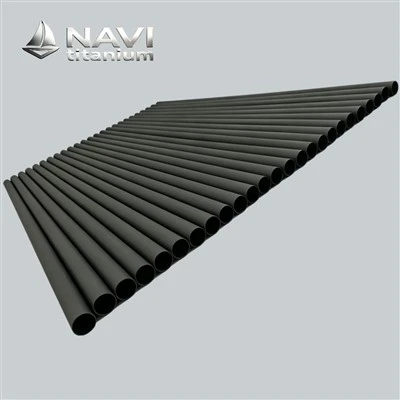
If you’re reading this, and you’re tired of replacing anodes every few months, dealing with inconsistent process results, or paying too much for chemicals that don’t deliver the results you need, it’s time to look at upgrading to a properly designed titanium anode system. We can help you run a small pilot test, design a custom system that fits your exact tank and process, and provide ongoing support to make sure your anodes run for years. Reach out to us to discuss your specific application, no obligation, no hidden fees.
Titanium Anode References
- Pletcher, D., & Walsh, F. C. (1990). Industrial Electrochemistry (2nd ed.). Chapman and Hall.
- Kraft, A. (2008). Electrochemical water treatment: a review. Journal of Applied Electrochemistry, 38(11), 1497-1518.
- Randin, J. P. (1974). The passivity of titanium in aqueous solutions. Electrochimica Acta, 19(10), 715-722.
- Trasatti, S. (1991). Electrocatalysis in the anodic evolution of oxygen and chlorine. Electrochimica Acta, 36(11), 1559-1575.
Shaanxi NAVI Titanium Metal Technology Co., Ltd.
As one of the most professional titanium anode manufacturers and suppliers in China, we’re featured by quality products and good price. Please rest assured to buy cost-efficient titanium anode in stock here and get quotation from our factory. Customized orders are welcome.
Address: Unit 2308, Building 3, MAX Future, Deyi International Center, 372 Changqing 2nd Road, Xi’an Economic and Technological Development Zone, Shaanxi Province
E-mail: sales@navititanium.com
WebSite: https://www.navititanium.com/
