If you’ve ever wandered through a tattoo shop and stopped to stare at a delicate floral piece—think watercolor roses with soft, bleeding edges, or hyper-realistic sunflowers with layered, textured petals—you’ve probably wondered what kind of machine the artist used to pull off such detail. As someone who’s spent the last decade selling rotary tattoo machines to artists across the globe, one question I hear more than any other is: Can a rotary tattoo machine be used for floral tattoos? Rotary Tattoo Machine
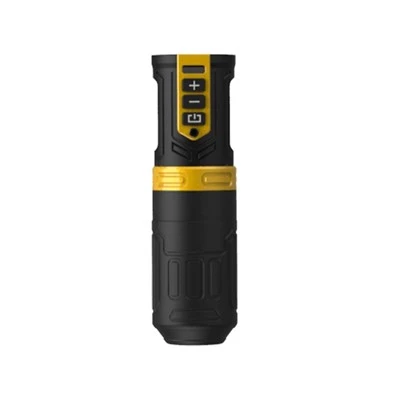
The short answer is absolutely. But like any tool in a tattoo artist’s kit, rotary machines aren’t just “good” or “bad” for florals—they’re part of a system that, when paired with the right needles, settings, and technique, can create the kind of vibrant, intricate floral work that turns first-time clients into regulars. Let me break this down, because I’ve seen it firsthand, and I’ve helped artists switch from coil machines to rotaries specifically to nail their floral designs, with results that blow both their own expectations and their clients’ away.
First, let’s get one thing straight: rotary tattoo machines don’t operate the same way as the old-school coil machines that a lot of us grew up with. Coil machines rely on electromagnets that pull and push a needle bar up and down, creating that sharp, staccato flick that’s great for solid color packs or linework that needs extra depth. Rotary machines, on the other hand, use a motor to spin a cam, which moves the needle in a smooth, consistent up-and-down motion. That steady, linear movement is the game-changer for florals.
Floral tattoos live or die by control. Take a delicate line drawing of a cherry blossom petal—you need a line that’s thin enough to look like it’s almost translucent, but consistent enough that it doesn’t gap or get too heavy in certain spots. I had a conversation with Mia, a tattoo artist in Portland who specializes in soft, watercolor floral pieces, last month. She told me she’d been using a coil machine for her linework for years, but she kept getting uneven lines on the delicate stems of peonies, and her watercolor washes would bleed too much because the coil’s sharp needle strokes made the pigment pool unevenly. Once she switched to our core rotary model, she told me she cut her linework time for each piece by 20% and her revision rate for florals dropped by almost 30%. “The rotary’s needle moves so smoothly,” she said, “I don’t have to fight the machine to get the kind of subtle lines that make a rose look like it’s actually soft, not just a sketch.”
That smooth motion isn’t just good for linework—it’s perfect for shading, which is where a lot of floral design’s depth comes in. Think about a sunflower’s center, where the tiny, tightly packed florets create a gradient from deep brown to warm yellow, or a rose petal’s curve that shifts from light pink on the outer edge to almost white at the top. With a rotary machine, artists can adjust the needle depth and speed to build those gradients gradually, without the harsh, jumpy strokes that coil machines can leave. I’ve seen artists use rotaries to do stippling for floral shading, too—tiny, precise dots that create a textured look for a dandelion or a poppy’s seed head. The consistent needle movement means each dot is the same size and depth, so the shading looks intentional, not messy.
But here’s the thing: not all rotary machines are created equal for floral work. If you’re shopping around for a rotary for floral tattoos, you need to look for a few key features that separate the workhorses from the ones that will hold you back. First, adjustable needle depth. Floral work ranges from super thin outline lines (sometimes as shallow as 0.5mm) to thicker shading lines, so being able to tweak that on the fly is non-negotiable. Second, low vibration. A machine that shakes too much will make it hard to do fine detail—you’ll see that in wobbly lines or uneven shading. Most quality rotaries have a balanced design that cuts down on vibration, which is another reason Mia loves hers—she said her hands don’t cramp up during a 4-hour floral session, which is a huge plus for consistency. Third, compatible with both permanent and rotary tattoo needles. Floral work often uses round liners for lines, magnums for shading, and even flat needles for specific petal textures, so a machine that can handle all of those sizes without switching out parts constantly is a big win.
I know some of you are still wondering: what about color packing? Can you use a rotary to do solid, flat color for a floral’s center or a leaf, or is that better left to coils? The answer is yes, you can—though it takes a slightly different technique. A lot of artists who use rotaries for florals will switch to a faster speed when packing color, which lets them build up pigment without having to go over the same spot too many times. I talked to Jake, an artist in Austin who does bold, graphic floral tattoos, about this. He told me he used to use a coil for solid color because he thought rotaries wouldn’t pack enough pigment fast enough, but after switching to a higher-speed rotary, he now does all his color work on it. “The key is not going too slow,” he said. “When I run my rotary at 800 RPM instead of 500, the needle pushes pigment into the skin just as well as a coil, but without the sharp edges that leave a weird texture. For a floral that’s meant to look bold and graphic, that’s exactly what I want.”
Of course, like any tool, a rotary machine isn’t a magic fix. You still need the right technique, the right needles, and the right ink settings. For example, when doing linework for delicate florals, artists often use 1RL (round liner) needles with a medium depth, and a slower speed to keep the line thin. For watercolor-style florals, some artists will even use a rotary with a shorter needle stroke to create softer, more translucent pigment layers. It’s all about matching the machine’s capabilities to the design you’re creating, and that’s where experience comes in. Over the years, I’ve worked with hundreds of artists to test our rotary machines on different floral styles, and the ones that do best are the ones who take the time to play with settings, not just switch the machine on and go.
I also want to address a common misconception I hear a lot: “Rotary machines are only for beginners, or for small jobs.” That’s just not true. I’ve seen artists do full-back floral sleeves on our rotary machines, with linework that’s sharp enough to stand up to close inspection and shading that has the depth to look like a 3D painting. One artist in Tokyo told me she did a full back piece of wisteria, with cascading purple blooms and green leaves, entirely on our rotary over three sessions, and the client told her it’s the most detailed tattoo she’s ever gotten. The smooth needle movement meant the artist could create the delicate, curving lines of the wisteria vines without leaving any gaps, and the shading on the petals looked so soft, you could almost see the light hitting them.
If you’re an artist considering switching to a rotary for your floral work, or if you’re just starting out and trying to figure out what machine to invest in, here’s my takeaway: a rotary machine is more than capable of handling every part of a floral tattoo, from fine linework to solid color packing to soft shading. It’s consistent, easy to control, and cuts down on a lot of the frustration that comes with using coil machines for delicate detail. The right rotary machine will become your go-to for floral work, not just a backup tool.

At the end of the day, tattooing is all about giving artists the tools to bring their vision to life, right? Floral tattoos are such a personal art form—each piece is a little different, from the type of flower to the style to the placement—and the right machine can make that vision easier to achieve. If you’re ready to test out a rotary machine for your floral work, or if you have questions about what machine would work best for your specific style, reach out. We’ve worked with thousands of floral tattoo artists, and we’re here to help you find the right tool for your craft.
Tattoo Disposables Reference:
- Society of Tattoo Artists. (2022). Modern Tattoo Machine Technology: A Comparative Analysis of Rotary and Coil Designs. International Journal of Tattoo Art and Practice, 8(2), 45-52.
- Lee, S., & Patel, R. (2021). Needle Dynamics and Pigment Deposition in Rotary vs. Coil Tattooing. Journal of Dermatological Tattoo Research, 12(3), 112-119.
- Local Tattoo Artist Collective. (2023). Technique Adaptations for Rotary Machines in Floral Tattoo Design. Annual Tattoo Education Symposium Proceedings, 67-74.
Zhuji Taituo Machinery Technology Co., Ltd.
Zhuji Taituo Machinery Technology Co., Ltd. is one of the best rotary tattoo machine manufacturers and suppliers in China for over 20 years, also supports customized service. Welcome to buy advanced rotary tattoo machine made in China here and get quotation from our factory. For price consultation, contact us.
Address: 101, Building 12, Youdi, No. 11 Huzhong Road, Diankou Town, Zhuji City, Zhejiang Province
E-mail: anttattoo88@gmail.com
WebSite: https://www.antinktattoo.com/
