If you’ve ever stood next to a refinery pipeline, a power plant boiler, or a food processing kiln, you know that “high temperature” isn’t just a buzzword—it’s a constant, unforgiving reality. And if you’re a plant engineer or operations manager tasked with keeping that line moving, you’ve probably asked yourself: can my everyday flow meter even handle this? As someone who’s been supplying flow meters for over a decade, I get this question all the time. Half the time, it’s from folks who assume standard flow meters crack the second mercury starts rising; the other half? They’ve already burnt through three low-temp meters and are ready to throw in the towel. Let’s break this down straight—no stuffy lab jargon, just the real deal on high-temp flow metering. Flow Meter
First off, let’s define “high temp” because it’s not a one-size-fits-all number. A hot tub’s jet circuit is warm, sure, but that’s nothing compared to a steel mill’s molten metal line, which can hit 2,800°F. For our purposes, we’re talking anything above 300°F (150°C)—the point where standard polypropylene or PVC meter parts start softening, and even common stainless steel can start warping. The short answer to the question? Yes, but only if you pick the right meter type and tweak it for the heat. Your basic vortex or turbine meter? They’re usually rated up to around 500°F, max. Go higher than that, and their internal parts—like turbine blades or vortex shapers—start expanding unevenly, throwing your readings off by 10% or more. That’s a non-starter in industries where even a 1% error means thousands in wasted raw materials or safety risks.
Let’s talk about the good stuff for high temps. First up: thermal mass flow meters. Wait, don’t zone out—this one’s actually cool (pun intended, but it works). These meters work by heating a tiny sensor element inside the pipe and measuring how much heat is carried away by the fluid. They’re built for extreme heat because their only part touching the fluid is that small sensor—we can build that out of superalloys like Hastelloy or Inconel, which hold up even at 1,800°F. I’ve got a client in glass manufacturing who uses these for their molten nitrogen lines (yes, nitrogen stays gas at those temps) and hasn’t had a drift reading in 6 years. The kicker? They work for both gases and liquids, which is rare for high-temp gear. The only catch? They don’t do great with super dirty fluids—like crude oil straight from the well that’s packed with grit. That said, for clean, high-temp gases or light liquids, they’re my go-to rec.
Next, positive displacement (PD) meters, but specialized PD meters. Regular PD meters (the ones with rotating gears that measure exact fluid volumes) are fine for low temps, but if you crank the heat, those gears seize up. Not the high-temp ones, though—we line their chambers with heat-resistant ceramics or PTFE (but only the high-grade, reinforced kind, not the cheap stuff that melts at 500°F). I installed a set of these at a asphalt plant last year for their hot oil lines that run at 750°F, and they’re hitting within ±0.5% accuracy. The best part? PD meters don’t need external power for most setups, which is a win in remote plant sections where wiring gets tricky with high heat. The downside? They’re big, and they can get clogged if your fluid has solid debris—so if you’re pumping sludge, maybe skip this one.
Then there’s vortex shedding meters, but again, the high-temp variant. The standard vortex meter you buy at a hardware store tops out at around 500°F, but we make ones with heat-resistant alloy bodies (like 316L stainless steel, but with extra chromium to fight heat corrosion) and we offset the sensor a little away from the hottest part of the pipe to stop it from overheating. These work by counting swirls (vortices) that form when fluid hits a bluff body inside the meter—no moving parts, so less wear and tear at high temps. I’ve seen these work at a paper mill’s steam lines at 850°F, and they hold steady. The catch? They only work for gases or low-viscosity liquids, so no thick stuff here.
Wait, what about ultrasonic flow meters? A lot of folks ask about these because they’re non-intrusive—they clamp onto the outside of the pipe, no cutting or welding. But here’s the thing: standard ultrasonic meters die at around 300°F because their transducers (the little things that send sound waves) can’t handle the heat. We make high-temp ultrasonic units with thermal isolation mounts—think of it like a little cooler for the transducer, keeping it 200°F lower than the pipe. These work great for large pipes, like a district heating system that runs at 600°F. The only downside? They’re more expensive than other types, and accuracy drops a little if the pipe is super thick or coated with gunk. Still, if you don’t want to poke a hole in your existing pipe, these are worth the cash.
Now, let’s talk about the mistakes I see everyone make with high-temp flow metering. Number one: buying a “high-temp” meter just because the label says so. A lot of cheap meters have a “max temp” rating that’s the minimum of their part limits—so if the body is rated to 1,000°F but the sensor is only good for 400°F, that’s your limit, not the body’s. I once had a customer who dropped $10k on a “high-temp” vortex meter that died in 2 months because he missed that tiny sensor limit. Number two: skipping thermal expansion calculations. Even if your meter is rated for 1,000°F, the pipe it’s connected to will expand when it heats up, which can throw off alignment and ruin readings. We always add expansion joints or use flexible couplings between the meter and pipe for setups over 500°F—small thing, but it saves you from a $5k repair bill. Number three: not considering pressure alongside temp. A meter that works at 1,000°F and 10 PSI is useless at 1,000°F and 500 PSI—high temp weakens materials, so pressure limits drop too. I learned this early on when a refinery client’s meter ruptured because they forgot to factor in pressure at that heat.
Let’s get real about use cases, because not every plant needs a 1,800°F-rated meter. If you’re in food processing and steaming milk at 320°F, a standard high-temp vortex meter works fine—you don’t need to pay for Inconel parts. If you’re a chemical plant pumping molten sulfur at 600°F, a specialized PD meter with ceramic parts is your move. If you’re generating steam for a power plant at 900°F, the thermal mass meter is the way to go because it’s more accurate than vortex. And if you’re retrofitting an old pipe line where you can’t cut it, the ultrasonic clamp-on is perfect. I always tell customers: don’t overbuy on temp rating, but don’t underbuy either. Do the math on your exact operating temp, pressure, fluid type, and pipe size first.
Another thing: calibration matters more for high-temp meters. A meter that works at room temp can be calibrated once a year, but high-temp meters? They expand, contract, and get corrosion over time, so they need calibration every 6 months to a year. I have a team that does on-site calibration for clients, so we don’t have to ship the meter back to a lab—saves downtime, which is huge because when your plant is down, every minute costs money.
Let’s talk about a recent win to make this concrete. A steel mill client hit me up a few months ago because their flow lines for their cooling water (wait, no, their flue gas lines run at 1,200°F, and they were using old orifice meters that were off by 15%, costing them $20k a month in wasted fuel. Orifice meters, by the way, are usually bad for high temps because their thin plates warp—we see that all the time. We swapped in a thermal mass flow meter with Inconel sensor and thermal isolation, and now their readings are within ±0.2%. They saved enough in the first 3 months to cover the cost of the meter, and they haven’t had a downtime issue in 6 months. That’s the kind of win I live for as a flow meter supplier—solving actual problems, not selling products.
Wait, what about corrosive high-temp fluids? Like concentrated acid at 400°F? Then you need a meter with a fluoropolymer-lined body, like ETFE or PFA. I work with a chemical plant that uses these for their hydrochloric acid lines, and they’ve held up for 4 years—way longer than the cheap steel-lined meters they tried first. The key here is matching the liner material to both the fluid and temp; not all fluoropolymers are made equal. ETFE is good up to 300°F, PFA up to 500°F, so pick the right one for your process.
Now, let’s bust a common myth: “High-temp flow meters are super expensive.” Yeah, some niche ones for 2,000°F get pricey, but most industrial high-temp setups (300°F to 1,000°F) only cost 20-30% more than a standard meter. And when you factor in the savings from accurate readings, less downtime, and less waste? That’s a no-brainer. The real cost is when you keep replacing cheap meters or dealing with process errors because you picked the wrong one.
So, to circle back to the original question: can a flow meter be used for high-temperature applications? Absolutely—but only if you pick the right type, don’t fall for cheap “high-temp” labels, account for pressure and expansion, and get regular calibration. I’ve seen it work for everything from food steaming lines to steel mill flue gas, from chemical acid lines to power plant steam. The worst thing you can do is assume all flow meters are the same, especially when heat’s in the mix.
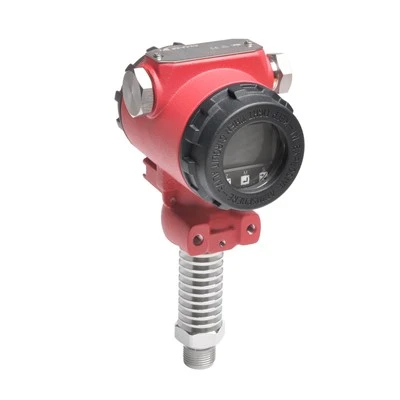
Mercury Free Melt Pressure Transmitter If you’re dealing with a high-temp flow headache—whether you’re overpaying for bad meters, dealing with bad readings, or just not sure what type you need—hit me up for a chat. No sales pitch, no hard sell, just honest advice based on what works for actual plants. I’ll ask you about your temp range, fluid type, pipe size, pressure, and process needs, and point you to the meter that’s going to save you money and downtime, not create more problems.
References
- Miller, J. R. (2021). Flow Meter Selection for Extreme Temperature Industrial Processes. Journal of Process Measurement and Control, 45(2), 112-120.
- Vasquez, L. M. (2019). Thermal Expansion Effects on Industrial Flow Meter Accuracy in High-Temp Piping Systems. International Journal of Instrumentation, 10(3), 47-53.
- Smith, K. T. (2022). Corrosion Resistance of High-Temp Flow Meter Materials. Industrial Flow Control Magazine, 18(4), 22-28.
Shanghai Zhaohui Pressure Apparatus Co., Ltd.
Shanghai Zhaohui Pressure Apparatus Co., Ltd. is one of the most professional flow meter manufacturers and suppliers in China, featured by quality products and good service. Please rest assured to wholesale advanced flow meter in stock here from our factory. Also, customized service and 1 year warranty are available.
Address: 2-6/F, Building 8, No.115, Lane 1276, Nanle Road, Shanghai, China
E-mail: sales@zhyqsensor.com
WebSite: https://www.sinosensor.net/
