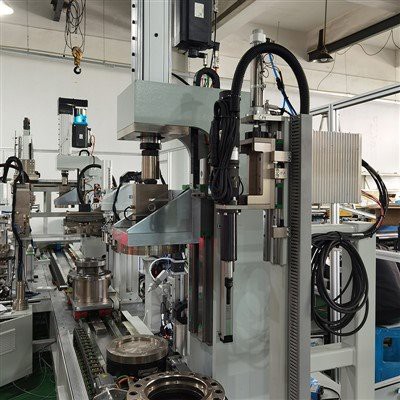
Hey there! I’m a supplier in the automotive industry production equipment game. Over the years, I’ve seen firsthand the challenges that come up when it’s time to upgrade production equipment. In this blog, I’m gonna break down these challenges based on my experiences dealing with auto manufacturers and their need for new gear. Automotive Industry Production Equipment
Cost Constraints
One of the biggest headaches when upgrading automotive production equipment is the cost. Let me tell you, these machines aren’t cheap! Whether it’s new robotic arms for assembly lines, high – tech 3D printers for prototyping, or advanced quality control systems, the price tag can be staggering.
Auto companies often operate on tight budgets and have to balance upgrading equipment against their other financial obligations, like R & D, marketing, and paying off debts. For example, a small to medium – sized car manufacturer might want to invest in new precision machining tools to improve the quality of engine components. But the cost of buying and installing these tools, along with training employees to use them, can put a huge strain on their finances.
Moreover, the cost isn’t just about the initial purchase. There are also ongoing expenses such as maintenance, software updates, and spare parts. These costs can add up over time and make it even more difficult for companies to justify the upgrade. And if the equipment doesn’t perform as expected, it can lead to additional costs in terms of downtime and lost production.
Compatibility Issues
Another major challenge is making sure that the new equipment is compatible with the existing production setup. The automotive industry has a complex web of machinery, software, and processes. When you introduce new equipment, it has to work seamlessly with what’s already there.
For instance, if a company wants to upgrade its welding equipment, the new machines need to communicate with the existing control systems. If there are compatibility issues, it can lead to production delays, quality problems, and even safety hazards. Sometimes, the software used in the new equipment might not be able to interface with the old software that runs the overall production line. This means that companies might have to invest in additional software development or system integration services to make everything work together.
In addition, the physical layout of the production facility can also pose compatibility problems. New equipment might be larger or require different power sources compared to the old ones. This could mean that companies have to modify their factory floors, electrical systems, or ventilation setups. All these modifications come with their own costs and time implications.
Workforce Training
Upgrading production equipment often means that employees need to learn how to use the new technology. This can be a real challenge, especially when the new equipment is significantly different from the old ones.
Most automotive workers are used to a certain way of doing things, and learning a new system can be intimidating. For example, if a company switches from traditional manual assembly methods to a highly automated robotic assembly line, employees who were used to working with their hands need to learn how to operate and maintain the robots instead.
Training programs need to be comprehensive and cover everything from basic operation to advanced troubleshooting. And let’s not forget that training takes time. During the training period, production can slow down, which can impact the company’s bottom line. Additionally, some workers might be resistant to change, fearing that the new technology will replace their jobs. Companies need to address these concerns and make sure that employees understand the benefits of the upgrade and how they can still contribute in the new setup.
Technological Obsolescence
The automotive industry is evolving at a breakneck speed, and technology is a major driver of this change. When you invest in new production equipment, there’s always a risk that it will become obsolete before you’ve even fully paid it off.
New manufacturing technologies, such as additive manufacturing (3D printing), are emerging all the time, offering more efficient and cost – effective ways of producing automotive parts. For example, a company that invests in a traditional injection – molding machine for plastic parts might find that 3D printing technology can produce parts with more complex geometries and in a shorter time frame.
Plus, the automotive industry is moving towards electric vehicles and autonomous driving. This means that production equipment needs to be able to adapt to these new requirements. If a supplier invests in equipment that is only suitable for traditional internal combustion engine vehicles, it could quickly become useless as the market shifts.
Regulatory and Safety Requirements
The automotive industry is heavily regulated, and upgrading production equipment means ensuring that the new machines meet all the relevant safety and environmental standards.
Safety regulations are constantly being updated, and new equipment needs to be designed and installed to comply with these rules. For example, new robotic equipment needs to have proper safety guards, emergency stop buttons, and collision – avoidance systems. Failure to meet these safety requirements can result in hefty fines, legal issues, and damage to the company’s reputation.
Environmental regulations are also a concern. New equipment should be energy – efficient and produce less waste. For example, if a company upgrades its painting equipment, it needs to make sure that the new system uses less paint and produces fewer volatile organic compounds (VOCs). Meeting these environmental standards can add to the cost and complexity of the equipment upgrade.
Supply Chain Disruptions
The global supply chain is a complex network, and any disruption can have a significant impact on the upgrade of automotive production equipment.
Components for new equipment are often sourced from different parts of the world. For example, a high – end CNC machine might have components made in Germany, Japan, and the United States. If there are issues such as natural disasters, trade disputes, or labor strikes in any of these regions, it can delay the delivery of the components, which in turn delays the installation of the new equipment.
These delays can be costly for automotive companies. Production schedules are often tightly planned, and any delay in upgrading equipment can lead to lost production capacity and missed deadlines. It can also cause a ripple effect throughout the supply chain, affecting suppliers and customers alike.
Integration with Lean Manufacturing Principles
Many automotive companies follow lean manufacturing principles, which focus on minimizing waste and maximizing efficiency. Upgrading production equipment needs to be in line with these principles.
New equipment should be able to integrate smoothly into the existing lean production system. For example, if a company uses a just – in – time (JIT) inventory system, the new equipment should not disrupt the flow of materials. It should also be designed in a way that reduces setup time and changeover times between different production runs.
However, implementing new equipment that adheres to lean principles can be challenging. It might require rethinking the entire production process and making significant changes to the workflow. This can be a time – consuming and complex task, especially for large automotive manufacturers with established production systems.
Conclusion
As you can see, upgrading automotive industry production equipment is no walk in the park. There are cost constraints, compatibility issues, workforce training needs, technological obsolescence risks, regulatory requirements, supply chain disruptions, and the challenge of integrating with lean manufacturing principles.
But despite these challenges, upgrading is essential for automotive companies to stay competitive in the market. As a supplier, I’m here to help you navigate these difficulties. I’ve got the expertise and the resources to provide you with the right equipment and support throughout the upgrade process.
Automotive Industry Production Equipment If your company is looking to upgrade its production equipment, I’d love to have a chat with you. We can sit down, discuss your specific needs, and come up with a customized solution that fits your budget and production requirements. Don’t hesitate to reach out and start the conversation about upgrading your automotive production equipment.
References
- Automotive News Publications
- Industry reports from automotive manufacturing associations
- Personal experiences and case studies from working with automotive clients
Shanghai Zenyan Automation Engineering Co., Ltd.
As one of the leading automotive industry production equipment manufacturers in China, we warmly welcome you to buy advanced automotive industry production equipment made in China here from our factory. All customized machines are with high quality and low price. Contact us for quotation.
Address: 3rd Floor, Building A, No.5629 Beisong Road, Chedun Town, Songjiang District, Shanghai, China
E-mail: zenyan_sh@163.com
WebSite: https://www.zenyanauto.com/
