Hey there! As an analog radio supplier, I often get asked about the frequency range of analog radios. It’s a pretty important topic, so I thought I’d break it down for y’all in this blog post. Analog Radio
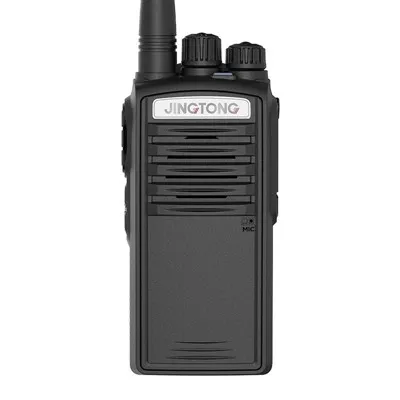
First off, let’s understand what we mean by analog radio. Unlike digital radios that use binary code to transmit and receive signals, analog radios work with continuous signals. These signals vary in amplitude (AM) or frequency (FM) to carry information like music, voice, and other audio content.
AM Frequency Range
Let’s start with AM, or Amplitude Modulation. AM radio has been around for ages. The frequency range for AM radio in most parts of the world is from about 535 kHz to 1705 kHz. That’s a pretty wide range of frequencies, and it’s what allows for a large number of AM stations to broadcast.
The lower frequencies in this range can travel longer distances, especially at night. This is because the earth’s ionosphere, a layer of the atmosphere, reflects AM radio waves back to the ground. So, you might find that you can pick up AM stations from far – away places when it gets dark. That’s why some people still love AM radio for getting news and talk shows from different regions.
But AM radio does have its drawbacks. The sound quality isn’t as good as FM because it’s more prone to interference from things like electrical appliances, thunderstorms, and even car engines. The bandwidth of an AM station is also limited, usually around 10 kHz, which means there’s less room for high – quality audio.
FM Frequency Range
Now, let’s move on to FM, or Frequency Modulation. FM radio operates in a higher frequency range, typically from 88 MHz to 108 MHz. Because these frequencies are much higher than AM, the waves travel in a more line – of – sight manner. This means that FM stations are generally more localized compared to AM stations.
One of the big advantages of FM is the sound quality. The frequency modulation method is less susceptible to interference, so you get a cleaner, clearer sound with more dynamic range. FM stations also have a wider bandwidth, usually around 200 kHz, which allows for high – fidelity audio. This is why most music stations these days prefer to broadcast on FM.
FM is also great for stereo broadcasting. Since the technology can handle more information, it’s easy to send left and right channel signals separately, giving you that great stereo sound experience.
Other Analog Radio Frequency Ranges
There are other frequency ranges used for analog radio as well, and they often serve specific purposes.
Shortwave Radio
Shortwave radio operates in the frequency range of 3 MHz to 30 MHz. These frequencies can travel long distances by bouncing off the ionosphere. Shortwave radio is popular for international broadcasting. You can tune in and listen to stations from all over the world. It’s like a window to different cultures and news sources. Many governments and international organizations use shortwave radio to reach a global audience.
VHF and UHF Bands
The Very High Frequency (VHF) band ranges from 30 MHz to 300 MHz, and the Ultra High Frequency (UHF) band goes from 300 MHz to 3 GHz. These bands are used for a variety of analog radio applications, including two – way radios used by emergency services, security personnel, and even some hobbyists.
VHF and UHF signals are also used for television broadcasting (although digital TV has become more common in recent years). The advantage of these higher frequencies is that they can carry more information and are less affected by obstacles compared to lower frequencies.
Why Frequency Range Matters
The frequency range of an analog radio is super important for a couple of reasons.
For broadcasters, the frequency range determines how far their signal can reach and the quality of the broadcast. If they want to reach a wide area, they might choose AM or shortwave frequencies. But if they’re aiming for high – quality audio in a local area, FM is the way to go.
As a user, the frequency range affects what you can listen to. If you want to pick up international stations, you’ll need a radio that can tune into the shortwave frequencies. And if you’re all about the latest music, an FM radio is your best bet.
Our Analog Radios and Frequency Range
At our place, we offer a wide range of analog radios that cover different frequency ranges. Whether you’re a fan of classic AM radio, love the high – quality sound of FM, or are interested in shortwave listening, we’ve got you covered.
Our radios are built with high – quality components to ensure that you get the best reception possible in each frequency range. We understand that different customers have different needs, and that’s why we stock radios with various frequency capabilities.

For example, we have some portable radios that can tune in to both AM and FM frequencies. These are great for people who like to listen to different types of stations while on the go. And if you’re into shortwave listening, we have some more advanced radios that can handle the entire shortwave frequency range, allowing you to explore the world of international broadcasting.
Get in Touch
android Poc Radio If you’re in the market for an analog radio, whether it’s for personal use, a business, or a hobby, I’d love to talk to you. We can discuss your specific needs and help you find the perfect radio with the right frequency range for you. Just reach out, and we’ll start the conversation. We’re here to make sure you get the best analog radio experience possible.
References
- "Radio Frequency Communications Principles and Applications" by John R. Autler.
- "The Radio Handbook" by Editors of ARRL.
Jingtong (Quanzhou) Electronics Co., Ltd.
We are one of the most professional analog radio manufacturers and suppliers in China, specialized in providing high quality customized service. We warmly welcome you to buy durable analog radio made in China here from our factory. For price consultation, contact us.
Address: No.288, Si Huang Industry Zone, Xia Mei Town, Nan An, Quanzhou, Fujian province, China 362302
E-mail: jtdjj@jtdjj.com
WebSite: https://www.jteradio.com/
