Hey everyone, if you’ve ever walked into a manufacturing shop and seen that big, bulky robotic welding arm zipping around metal parts like it’s playing a high-stakes video game, you’ve probably seen a flexible robotic welding system. But here’s the thing that most folks (even some veteran shop managers) don’t ask enough: how do these machines actually talk to every other part of the workflow? Like, do they just weld in a bubble, or is there a whole network behind the scenes that keeps the whole operation from grinding to a halt? As someone who’s been supplying these systems for almost a decade—fielding late-night calls when a client’s line goes down, helping them tweak connectivity to keep up with new orders—I get asked this question all the time. So let’s break down what network connectivity for flexible robotic welding systems actually is, no boring jargon allowed. Flexible Robotic Welding Systems
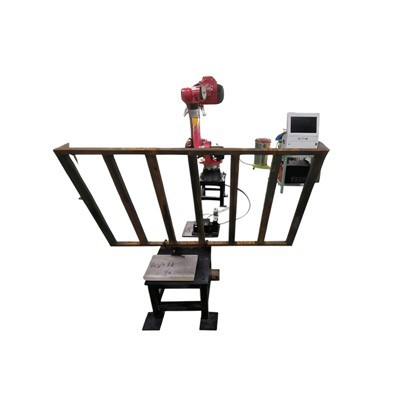
First off, let’s get one thing straight: flexible robotic welding systems aren’t like the old-school welding robots you might’ve seen in auto factories 20 years ago. Back then, a robot was programmed to do one exact weld on one exact car part, all day, every day. If you needed to switch to a new part, you had to shut down the line for hours, re-program the robot, and hope you didn’t mess up the calibration. These days? Flexible systems are built to switch between 5, 10, even 20 different weld jobs in a single shift—no big shutdown needed. And that ability to bounce around jobs is 100% tied to their network connectivity. It’s not just a “nice-to-have”; it’s the backbone that makes flexibility possible.
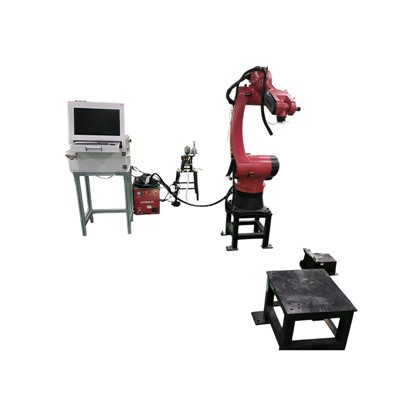
Let’s start with the local side first, because that’s where the system lives every day. Most flexible welding setups run on a mix of wired and Wi-Fi, right? We usually go with Ethernet IP for the core robot and the welding power source—wired, because it’s fast and reliable, no dropouts when you’re moving parts around. Then we add Wi-Fi 6 or 6E for the smaller peripherals: the part feeders, the cameras that check for weld defects, the HMI (human-machine interface) touchscreen that the operator uses to tweak settings. Wait, but why mix both? Wired is non-negotiable for the stuff that can’t afford a hiccup—if the robot loses signal mid-weld, that’s a bad weld, maybe a broken tip, and a whole part wasted. The peripherals? They can handle a little Wi-Fi, since they’re not doing the high-stakes welding themselves. We also make sure to set up a separate VLAN (virtual local area network) for each client’s welding line—no cross-contamination with other machines on the shop floor, that’s a big one. We’ve had clients where a random CNC router on the same network dropped a big file and took down their welding line for 20 minutes before, so we learned quick to isolate those systems.
Then there’s the big stuff: connectivity to the rest of the factory. Flexible welding systems don’t exist in a vacuum. If your production scheduler decides you need 100 more of a certain part by tomorrow, that order has to get to the robot fast. So we integrate these systems with the client’s MES (manufacturing execution system) and ERP (enterprise resource planning) tools. Like, if the ERP says “Order #4567 is priority,” it sends a signal straight to the robot’s HMI: “Load program B-12, use material X, weld for 12 seconds.” No operator typing it in, no mistakes, no delay. We once worked with a HVAC parts maker who used to have their operators manually enter new job codes, which led to wrong welds about 8% of the time. After we set up the ERP-MES-welding connectivity? That dropped to less than 0.5%. That’s not just better for them—it’s thousands of dollars saved in scrap, and way less headache for their team.
Wait, but what about remote stuff? A lot of our clients don’t have a robotics expert on staff 24/7, especially smaller shops. So we set up secure remote access for our techs too. If a robot is acting wonky—like it’s skipping welds or the camera is blurry—our guys can log in, check the code, adjust settings, even update the firmware, without driving out to the shop. That cuts down downtime so much. Before we started offering that, a client would wait 3 days for a tech to come fix a minor programming glitch; now it’s 15 minutes. Of course, security is huge here—we use zero-trust access, two-factor auth, all that good stuff, because we don’t want some random hacker messing with a $500k robotic welding system. Last year, a client of ours almost got hit by a ransomware attack, and because we had their welding network isolated and secure, their line was the only one that didn’t go down. That’s a big win.
But here’s the part most people don’t think about: the connectivity that lets the system learn. Modern flexible welding systems have built-in sensors that track every weld: how much amperage, how fast the wire is feeding, if the part is in the right spot. All that data gets sent to the cloud, or to the client’s on-prem server, to be analyzed. Over time, the system can spot patterns—like “when we use this batch of steel, we need to bump the weld speed by 5%” or “the camera picks up a bad weld if the torch is offset by 2mm before the weld even starts.” That’s the real magic of flexible systems, right? They get better at what they do over time, not just stay the same. But that only works if the connectivity is consistent enough to send all that data without lag. If your network is slow, you’ll get delayed data, and the AI will make bad calls. We test every system’s data transfer speed before we leave the client’s shop—no cutting corners there.
Now, let’s talk about the stuff that can go wrong, because connectivity isn’t always perfect. We’ve had clients who tried to save money on their network setup, using old Wi-Fi that couldn’t handle all the devices. They’d have the robot, two part feeders, a vision system, and two operator tablets all on the same 2.4GHz Wi-Fi channel, and boom—signal drops, slow transfers, weld errors. Or they’d mix the welding network with their whole shop’s Wi-Fi, so when someone streamed a movie on the break room TV, it crashed the line. That’s why we always do a full site assessment before installing a system. We walk the shop, check where the routers are, how many other devices are on the network, even test for metal obstructions that can block Wi-Fi. A lot of old shops have metal beams and conveyor systems that mess with wireless signals, so we adjust the router placement or add extra access points if needed. We had a client in a old auto body shop where the thick metal walls killed the Wi-Fi signal on one end of the line, so we added a pair of Wi-Fi extenders that talk to each other, no cables needed, and fixed the whole problem.
Another common issue: scalability. A lot of shops start with one flexible welding system, then a year later they add a second one, or integrate it with a paint line or a material handling robot. If the initial connectivity setup is too basic, they have to rip everything out and start over, which is a huge hassle and a waste of money. So we build all our systems with modular connectivity—meaning we can easily add new devices, new integrations, or expand the network without a full overhaul. That’s a big selling point for us, because we know most clients don’t have their whole production plan mapped out for 5 years, but they do know they’ll grow. We had a small agricultural equipment maker who started with one welding line, then added two more over 3 years, and all we had to do was add extra VLANs and a couple new routers, no downtime for their operations.
Wait, let’s make this relatable. Think of a flexible robotic welding system like a team. The robot is the lead welder, the vision camera is the quality checker, the part feeder is the helper that brings materials, the HMI is the foreman, MES/ERP is the production manager that tells everyone what to do, and our techs (and our remote access) are the maintenance guys that fix things when they break. None of them can do their job if they can’t talk to each other. If the lead welder can’t hear the production manager, they’ll be waiting around for parts when they should be welding. If the quality checker can’t talk to the welder, they’ll reject good parts because no one told them the weld specs changed. That’s exactly what network connectivity does for these systems—it keeps everyone on the same page, working efficiently, and flexible enough to switch when needed.
I know this stuff can sound technical, but the bottom line is this: good network connectivity isn’t just a feature of a flexible robotic welding system—it’s the reason it’s flexible in the first place. A system with bad connectivity is just a fancy single-task robot, no better than the ones from 20 years ago. The ones that can switch jobs, adapt, integrate with your whole factory, and save you money? They live and breathe on their network.
If you’re in the market for a flexible robotic welding system, don’t just ask about how many axes it has or what welding processes it supports. Ask about the connectivity. Ask how it integrates with your existing ERP. Ask about remote support. Ask if the network is isolated from the rest of your shop, and if it’s scalable. We’ve had too many clients come to us after buying a system from a competitor that had great specs but terrible connectivity, and they’re stuck with a robot that’s basically a paperweight half the time because they can’t get it to talk to their other tools. We don’t want that for anyone.
If you’re ready to stop dealing with clunky, inflexible welding lines and start a conversation about building a system that fits your shop, hit us up. We can send one of our techs over to do a free site assessment, answer all your questions, and walk you through exactly how the network will work for your specific needs—no sales pitch, no jargon, just straight talk about what will actually make your welding operations run smoother.
Nail Gun Robot References
- Robotic Welding: Flexible Systems and Advanced Applications, 2nd Edition, CRC Press, 2021
- Industrial Network Connectivity for Smart Manufacturing: Best Practices, ISA-95 Standards, 2022
- Secure Remote Access for Industrial Robotics: Compliance and Implementation, IEEE Transactions on Industrial Informatics, 2023
- Flexible Manufacturing Systems: Integration and Performance Metrics, Journal of Manufacturing Systems, Vol. 62, 2022
Dongguan Chuanglida Intelligent Equipments Co., Ltd.
Address: Room 201, Building 2, No. 61, Shachang 1st Road, Dalang Town, Dongguan City, Guangdong Province
E-mail: haoguangli001@outlook.com
WebSite: https://www.boruntestech.com/
