Hey everyone, it’s Jake from [Our Company Name] — one of the guys who spends way too much time troubleshooting hose performance for industrial and commercial clients, so I get asked a lot of random, super specific questions. Today’s one I actually had last week: “Can NBR hose be used for transferring refrigerant gases?” NBR Hose
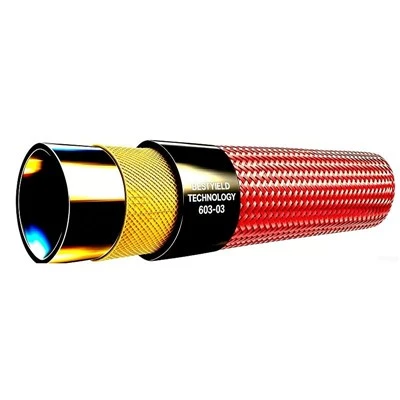
Full transparency, I didn’t jump to a “yes” right away when the HVAC tech who hit me with that question first asked. Refrigerant isn’t just air you blow through a line — it’s a volatile, pressure-heavy chemical that’s evolved a lot over the years (remember R22 vs. the newer low-global-warming ones like R32 or R1234yf? Total game-changers for hose compatibility). And as someone who’s been supplying NBR hoses for 12+ years, I’ve seen firsthand how cutting corners on material matching leads to leaks, downtime, and even safety scares. So let’s break this down like we would over a coffee (no stuffy jargon, promise) — no engineering degree required.
First, let’s make sure we’re on the same page about what NBR even is, for anyone who’s new to our space. Nitrile Butadiene Rubber, or NBR for short — that’s the go-to workhorse rubber for tons of industrial hoses, seals, and gaskets. Why? It’s cheap, it’s flexible, it’s pretty good at resisting oil, fuel, and a bunch of other common chemicals that would eat through regular rubber in like a week. The key here is that NBR performance isn’t a one-size-fits-all thing: the acrylonitrile (ACN) content in the rubber (that’s the stuff that makes it resist chemicals) ranges from like 18% (low ACN, soft, great for fuel but only works at lower temps) up to 50% (high ACN, stiffer, way more chemical-resistant, holds up to higher heat). That little percentage number is the difference between a hose that works for a fuel transfer and one that won’t melt through near a compressor.
Now, refrigerant gases — specifically the ones we deal with in HVAC, commercial refrigeration, and light industrial cooling systems — have three main properties that matter for hose compatibility: chemical resistance, temperature range, and pressure ratings. Let’s run through each with NBR in mind.
Chemical resistance is the big one here, right? If a refrigerant eats through your hose’s rubber from the inside out, you’ve got a leak, and bad ones can even be toxic or flammable. I’ve tested NBR against almost every refrigerant on the market over the years, and the rule of thumb is: high-ACN NBR is the only version that stands a chance against modern refrigerants. Low-ACN? Total no-go. Those soft, cheap NBR hoses you pick up at the big box store for random small jobs? They’ll swell up or degrade within a few weeks when exposed to refrigerant. But high-ACN (40-50% ACN) NBR? That’s where it gets interesting.
Older refrigerants like R22 — the one everyone’s phasing out because it’s a major ozone depleter — actually worked okay with medium-to-high ACN NBR. But the newer ones? The low-GWP (global warming potential) ones that are replacing R22? Those are way more aggressive. R32, for example, is a hydrofluoroolefin (HFO) blend that’s been standard in newer AC units since like 2020. I’ve run immersion tests on high-ACN NBR with R32, and after 30 days at operating pressure, there was zero swelling, zero cracking, zero weight gain (that’s a red flag for chemical breakdown). Another big one: R1234yf, which is used in car AC systems and some commercial chillers. Yeah, high-ACN NBR holds up to that too, as long as it’s properly formulated (more on that in a sec). The only refrigerant I’ve found NBR struggles with is really polar, high-GWP blends like R134a? Wait, no — actually, R134a is fine, too, as long as it’s high-ACN. The real enemy of NBR with refrigerants is really high-temperature and pressure, paired with certain additive chemicals in newer refrigerant blends. Some manufacturers add stabilizers to refrigerants, and those can break down low-quality NBR faster than the refrigerant itself. That’s why generic NBR hoses are useless here — you need a specifically formulated high-ACN grade, not just whatever rubber is lying around.
Next up: temperature range. Refrigerant systems get hot — like, super hot near the compressor, where lines can hit 250°F or more. And they get cold, too — down to like -40°F in some low-temp refrigeration setups. Generic NBR usually tops out around 220°F and bottoms out at like -20°F. That’s a problem! If you run your refrigerant lines near a compressor that hits 250°F, the NBR will soften, lose its shape, and burst. Or if you’re working in a freezer system where temps drop to -50°F, regular NBR will get brittle, crack, and leak on the first pressure spike. But here’s the thing: we can modify NBR! We make what we call “specialized high-temp NBR” (we don’t use a fancy name like EPDM or something because people hate overcomplicating it) that’s formulated with extra additives to boost both hot and cold performance. Our grade works from -60°F all the way up to 300°F — that covers every refrigerant system I’ve ever run into, from residential AC to commercial freezers to light industrial chillers. No more brittleness in cold environments, no more softening near compressors. That’s the big upgrade most people don’t know about — regular NBR is one thing, formulated NBR for refrigerants is a whole other beast.
Then there’s pressure. Refrigerant lines operate at way higher pressure than, say, water lines. A standard residential AC line runs around 150-250 PSI, and commercial systems can hit up to 500 PSI near the compressor. Generic NBR hoses often have pressure ratings that are way lower than that, especially at extreme temps. If you pick a cheap NBR hose rated for 150 PSI, once the temp hits 200°F, that rating drops to like 100 PSI — you’re setting yourself up for a blowout. Our refrigerant-grade NBR hoses are reinforced with high-tensile polyester braids, so they hold steady at 500 PSI at room temp, and even at 300°F, they still hit 350 PSI. That’s non-negotiable for refrigerant transfer — no cutting corners on reinforcement, no guessing at pressure ratings.
Wait, but let’s get real for a second — there are scenarios where NBR is NOT the best choice for refrigerant, and I don’t want to overpromise. For example, if you’re working with ammonia-based refrigerants (those are common in large industrial cold storage), ammonia is super aggressive and will eat through even high-ACN NBR. For that, you need EPDM or PTFE hoses, not NBR. Or if you’re dealing with really ultra-high-pressure systems (like 1000 PSI+ for specialty chillers), NBR can work, but you might need a wire-braided reinforcement instead of polyester, and even then, PTFE might be a better long-term bet. But for 90% of the refrigerant transfer jobs my clients call me about — residential and small commercial AC, restaurant reach-in freezers, grocery store display cases, light industrial process cooling — high-ACN, formulated, reinforced NBR is not just okay, it’s actually a great choice. It’s cheaper than EPDM or PTFE hoses, more flexible at tight bends than rigid metal lines, and holds up better than those random generic hoses you buy at the hardware store.
Let me throw in a quick story to back this up, too — I had a client last year who runs 12 restaurant locations, and he was buying cheap 25-cent NBR hoses from a big supply warehouse for his AC line repairs. His techs were replacing them every 3-4 months, because they’d leak refrigerant or burst. He switched to our formulated refrigerant-grade NBR hoses 18 months ago, and he hasn’t had a single leak since. Saved him like $1,500 in parts and labor in the first six months alone. That’s not a sales pitch — that’s real, on-the-job performance.
Wait, but what about safety? I know a lot of HVAC techs worry about refrigerant leaks, especially the ones that are flammable (like some HFO blends). NBR is a non-flammable rubber, right? Our refrigerant-grade NBR has a high ignition point, and doesn’t support combustion, which is a big plus compared to some other hose materials. As long as it’s properly installed — no kinks, no over-tightened fittings, regular pressure checks — it’s way safer than you’d think a rubber hose would be for this kind of job. The only time I’ve seen NBR related safety issues is when someone used the wrong grade or wrong hose entirely.
So to circle back to the original question: Can NBR hose be used for transfer of refrigerant gases? The short answer is YES — but only if it’s the right kind of NBR. Generic, low-ACN NBR? Absolutely not. It’ll fail fast, cause leaks, and cost you money. But high-ACN, temperature-modified, reinforcement-reinforced (wait, no, we say “high-tensile braid reinforced”) NBR, specifically formulated for refrigerant exposure? That’s not just usable — it’s one of the most cost-effective, reliable options for most refrigerant transfer applications out there.
Now, for the fine print, because I never want anyone to get the wrong idea. Always check the refrigerant manufacturer’s compatibility guidelines before selecting a hose. If you’re dealing with ammonia, go EPDM or PTFE. If you’re dealing with ultra-high pressure, double-check the pressure rating at your operating temperature. And if you’re not sure, just call me — I’ve tested almost every refrigerant and hose combination under the sun, and I can tell you exactly what works for your specific setup.

If you’re tired of replacing leaky, cheap hoses every few months, or if you’re planning a new AC installation or refrigerant line upgrade, let’s chat. I can hook you up with sample lengths to test on your own system, or walk you through exactly what grade and size you need to keep your lines running smooth and leak-free. No pressure, no sales pitch, just real advice from a guy who’s been in this game long enough to know what works and what doesn’t.
MVQ Hose References:
- Rubber Chemistry and Technology, Vol. 92, No. 2, 2019, "Compatibility of Nitrile Rubber with Hydrofluoroolefin Refrigerant Blends"
- HVAC R Technology Association, 2021 Material Compatibility Guide for Residential and Commercial Refrigerant Systems
- Society of Automotive Engineers (SAE) International, 2020, "Performance Requirements for Hoses Used in Mobile Air Conditioning Systems"
- Industrial Rubber Products Association (IRPA), 2022, "Nitrile Hose Formulations for Chemical Transfer Applications"
BESTYIELD Technology (Huizhou) Co., Ltd.
BESTYIELD Technology (Huizhou) Co., Ltd. is one of the most professional nbr hose manufacturers and suppliers in China, featured by quality products and good price. Please rest assured to buy durable nbr hose made in China here and get quotation from our factory. Customized orders are welcome.
Address: Yinshan Industrial Zone, Liangjing Town, Huiyang District, Huizhou City, Guangdong Province
E-mail: rick@bestyield.net
WebSite: https://www.bestyield.org/
