If you’ve ever found yourself staring at a dry tap during a dry spell, or juggling between insufficient city water pressure and the cost of bottled water for your home, you’ve probably wondered: is a deep well pump the right fit for my domestic needs? As a deep well pump supplier who’s worked with hundreds of homeowners over the past 12 years, I’ve heard this question more times than I can count—and the answer almost always depends on your specific situation, not a one-size-fits-all rule. Let me break this down with the kind of hands-on perspective you won’t find in generic online guides, plus the science behind why deep well pumps work (or don’t work) for daily home use. Deep Well Pump
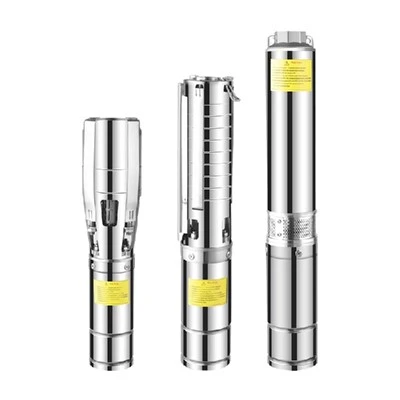
First, let’s get a quick science lesson out of the way, because I’ve seen too many homeowners skip this and end up with a pump that’s completely wrong for their well. A deep well pump is designed to pull water from wells that are deeper than 25 feet—typically 50 feet all the way down to 400 feet, and sometimes even deeper for rural properties. Unlike shallow well pumps, which sit above ground and rely on atmospheric pressure to lift water, deep well pumps are submersible: they’re lowered into the well, right into the water itself. That’s a key detail. Atmospheric pressure can only push water up about 33 feet, so if your well is 40 feet deep, a shallow pump will never get the water out. The submersible design of a deep well pump eliminates that limit, which is why it’s the only viable option for most residential wells in areas where city water isn’t available.
But here’s where the debate starts: just because a deep well pump can pull water from a deep well, does that mean it’s good for domestic use? Let’s talk about the pros first, because that’s what sells most people on the idea. For rural homeowners—my bread and butter, let’s be real—deep well pumps are a game-changer. I recently worked with a family in central Ohio who had a 320-foot well and was using a generator to power a makeshift shallow pump that kept burning out every few months. Switching to a submersible deep well pump eliminated that problem immediately. Submersible pumps are more energy-efficient for deep wells because they don’t waste energy pushing water up a long pipe; they’re already in the water, so the work to move it to your house is minimal. That translates to lower electric bills over time—something every homeowner cares about, especially with utility costs creeping up.
Another big win for domestic use: consistent water pressure. A lot of shallow pump systems struggle with low pressure when multiple appliances are running at once—doing laundry, running the dishwasher, and taking a shower all at once can cause a noticeable drop. Deep well pumps deliver a steady, high-pressure stream because they’re designed to maintain a consistent flow rate, usually 10 to 20 gallons per minute (GPM) for residential models. That’s more than enough for a family of four or five, which is exactly what most homeowners need. I’ve even installed systems with pressure tanks that store extra water, so you never run out mid-shower, even if the pump cycles on and off quickly.
But it’s not all sunshine and low electric bills. There are real drawbacks that make deep well pumps a bad fit for some domestic setups, and I’ve had to turn away more than a few customers who thought a deep well pump was the answer to their problems. First: the initial cost. A shallow well pump might run $150 to $300, but a basic residential deep well pump is $500 to $1,500, depending on the depth of your well and the horsepower you need. Add in installation—since you have to lower a submersible pump 100+ feet into a well, you can’t just do it yourself unless you’re a licensed plumber with experience in well systems. Installation costs can add another $500 to $1,000, so total upfront cost is often $1,000 to $2,500. That’s a big investment for someone who just needs a temporary fix, like a homeowner in a suburban area with a 20-foot well who could easily use a $200 shallow pump instead.
Then there’s maintenance. Submersible pumps are out of sight, out of mind until they break—and when they do, replacing them is a hassle. You have to pull the pump up out of the well, which requires special equipment most homeowners don’t have, and that means hiring a professional again. I’ve seen customers wait weeks for a replacement pump, because their well is 350 feet deep, and the new pump has to be custom-configured for that depth. Shallow pumps, by contrast, are right above your well head—if they stop working, you can check the wiring or replace the motor in an hour, no big deal. For busy suburban homeowners who don’t want to deal with unexpected repair costs, that’s a major con.
Another thing to consider: well depth and water quality. If your well is less than 25 feet deep, a deep well pump is overkill. It’s more expensive, more complicated, and you won’t get any better performance than a shallow pump. Even if your well is 50 feet deep, you might want to test your water before making a decision. Deep well pumps pull water from the aquifer itself, so if your water has high levels of iron, sediment, or bacteria, the pump’s impellers can get clogged faster, leading to more breakdowns. I always recommend that new customers get a water test first—we even offer free test kits to anyone who’s considering a pump from us—because a sediment filter might be necessary with a deep well pump, adding $100 to $300 to your total cost.
Wait, let’s talk about a common myth I hear all the time: “Deep well pumps use too much electricity.” That’s only true if you get the wrong size pump. For example, a 1-horsepower deep well pump is way too big for a small household with a 100-foot well—it will cycle on and off constantly, wasting energy and shortening the pump’s lifespan. A good supplier (that’s us, by the way) will help you calculate the right horsepower based on your well depth, your household’s water usage, and the size of your pressure tank. I recently sized a pump for a single person with a 150-foot well: a ½-horsepower model, which uses about 750 watts when running—roughly the same as a window air conditioner. That’s not a huge drain on your electric bill, especially if you’re using it instead of paying for city water, which in many areas is $3 to $5 per 1,000 gallons. If you use 1,000 gallons of water a month, that’s $3 to $5 in city costs vs. less than $1 in electric costs for a deep well pump. The math works out most of the time, but only if you size correctly.
Let’s also address a scenario where domestic use is a perfect match: off-grid homes or properties with no access to municipal water. If you’re living in a remote cabin or a farm where city lines don’t exist, a deep well pump isn’t just a good idea—it’s a necessity. I’ve installed these pumps for families in the Rockies and the Great Plains where the nearest water line is 10 miles away. Those customers tell me their pumps are the most important part of their home’s infrastructure, not just for drinking water but for watering gardens, washing livestock, and even running small irrigation systems. On the flip side, if you’re in a suburban neighborhood where city water is available, a deep well pump is almost never worth it. The city will charge you a monthly fee that’s probably less than the upfront and maintenance costs of a deep well pump, plus you don’t have to deal with well repairs.
Another case where deep well pumps make sense: homes with high water demand. If you have a large family, run a home business, or have a swimming pool that you fill from your well, you’ll need a pump that can keep up. A shallow pump might max out at 10 GPM, which is enough for basic use but will struggle to fill a 20,000-gallon pool in a week. A deep well pump can easily deliver 15 to 20 GPM, cutting that time in half. I had a customer with a 1-acre property who runs a small pet grooming business out of his garage—he needed constant water for bathing dogs, and his shallow pump couldn’t keep up. Switching to a deep well pump let him run two bathtubs and a hose at the same time without any pressure drops. That’s a practical use case I see all the time.
Now, let’s get into the details that set our company apart from other suppliers. I’ve been working in the deep well pump industry since 2011, and I’ve learned that a lot of suppliers will just sell you the biggest, most expensive pump without asking questions. That’s how people end up with systems that don’t work for their homes. For example, a customer last year came to us with a 300-foot well and thought he needed a 2-horsepower pump. When we did the math, his household only needed 12 GPM, which required a ¾-horsepower pump—saving him $500 on the initial cost, plus lower electric bills every month. That’s the kind of personalized service we offer: we don’t just sell pumps, we work through your specific needs to find the right fit.
I also want to touch on longevity. A well-maintained deep well pump can last 10 to 15 years, sometimes longer, compared to a shallow pump which might last 5 to 8 years. Because submersible pumps are cooled by the water they’re in, they don’t overheat as easily as shallow pumps that sit in hot, dusty well heads. That’s a big plus for domestic use, where you don’t want to replace your pump every few years. The key here is regular maintenance: every 2 to 3 years, a professional should pull the pump up to check for sediment buildup, test the wiring, and make sure the pressure tank is working properly. We offer annual maintenance plans for our customers, which is a small cost compared to a full pump replacement.
Let’s not ignore the risks, though. If your well is old or has structural issues, a deep well pump might not be safe. For example, if your well casing is cracked, sediment could get into the pump, clogging it and causing it to burn out. Or if the well is shallow (less than 25 feet) and has a high water table, the pump might be submerged in water that’s prone to contamination, which could affect your drinking water. That’s why a professional inspection before installation is non-negotiable. We always offer free well inspections for potential customers, so you know exactly what you’re getting into before you invest in a pump.
So, to circle back to the original question: Is a deep well pump suitable for domestic use? The short answer is: it can be, but only if your situation fits. It’s ideal if you’re in a home with no access to city water, have a well deeper than 25 feet, need consistent high pressure, and are willing to invest upfront and handle occasional maintenance. It’s not ideal if you have a shallow well, are on city water, or want a low-cost, low-maintenance solution.
If you think a deep well pump might be the right fit for your home, we’re here to help. We work with homeowners across the country to find the perfect pump size, handle installation, and provide ongoing support to make sure your system runs smoothly. No pushy sales pitches, no one-size-fits-all products—just honest advice from people who’ve been in your shoes, helping you get the water solution that works for your family. Don’t hesitate to reach out so we can walk through your needs, inspect your well, and get you set up with a reliable deep well pump that will serve your home for years to come.
YYS Solar Screw Pump References:
- U.S. Environmental Protection Agency. (2022). Private Drinking Water Wells: A Guide for Homeowners. EPA 816-F-22-004.
- National Ground Water Association. (2021). Residential Pump Systems: Selection, Installation, and Maintenance. NGWA Press.
- Energy Star. (2023). Home Water Pump Efficiency: Buying Guide for Residential Systems. U.S. Department of Energy.
- Water Systems Council. (2022). Well Water Quality and Treatment for Domestic Use. WSC Publication 101.
Longbiao Pump Industry Co., Ltd.
We are one of the most professional deep well pump manufacturers and suppliers in China, featured by quality products and low price. Please rest assured to buy discount deep well pump for sale here from our factory. We also accept customized orders.
Address: Unit 101, Building 11, Pan’ao Entrepreneurship Park, Daxi Town, Wenling City, Taizhou City, Zhejiang Province, P.R. China
E-mail: 1653746797@qq.com
WebSite: https://www.cnlongbiao.com/
